Sudokutope Techniques 2: Central Pinwheel Match Lock
Introduction
The first post in this series introduced the Rim-Span Match Lock technique, which identifies pairs of cells on the perimeter of the easy board that must always share the same value. In this post, we'll introduce the Central Pinwheel Match Lock technique, which identifies five cells in a pinwheel at the center of the board that must always share the same value. This technique is even more powerful: once you know the value in one cell, you can immediately fill in the same value in four others.
The five cells
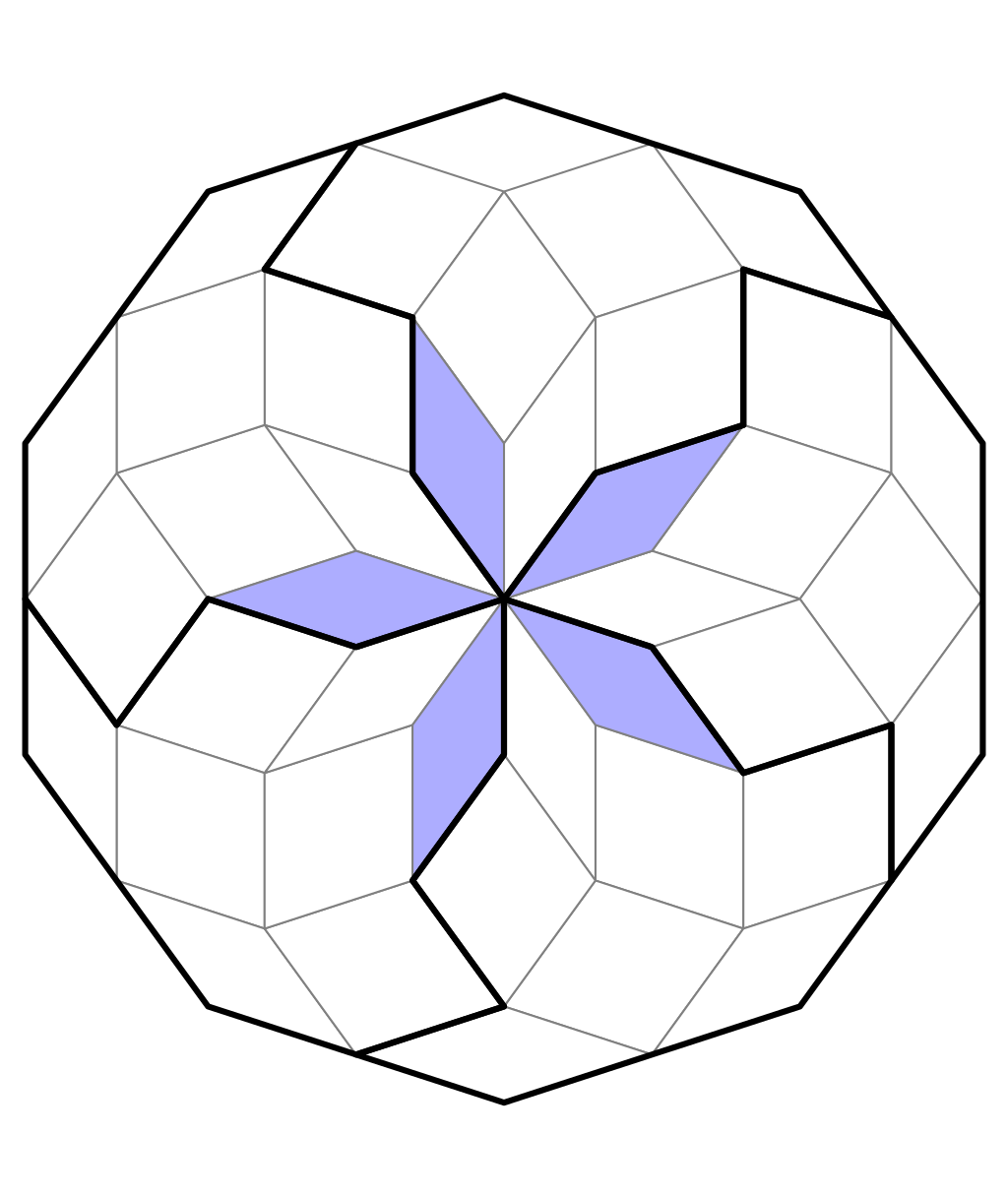
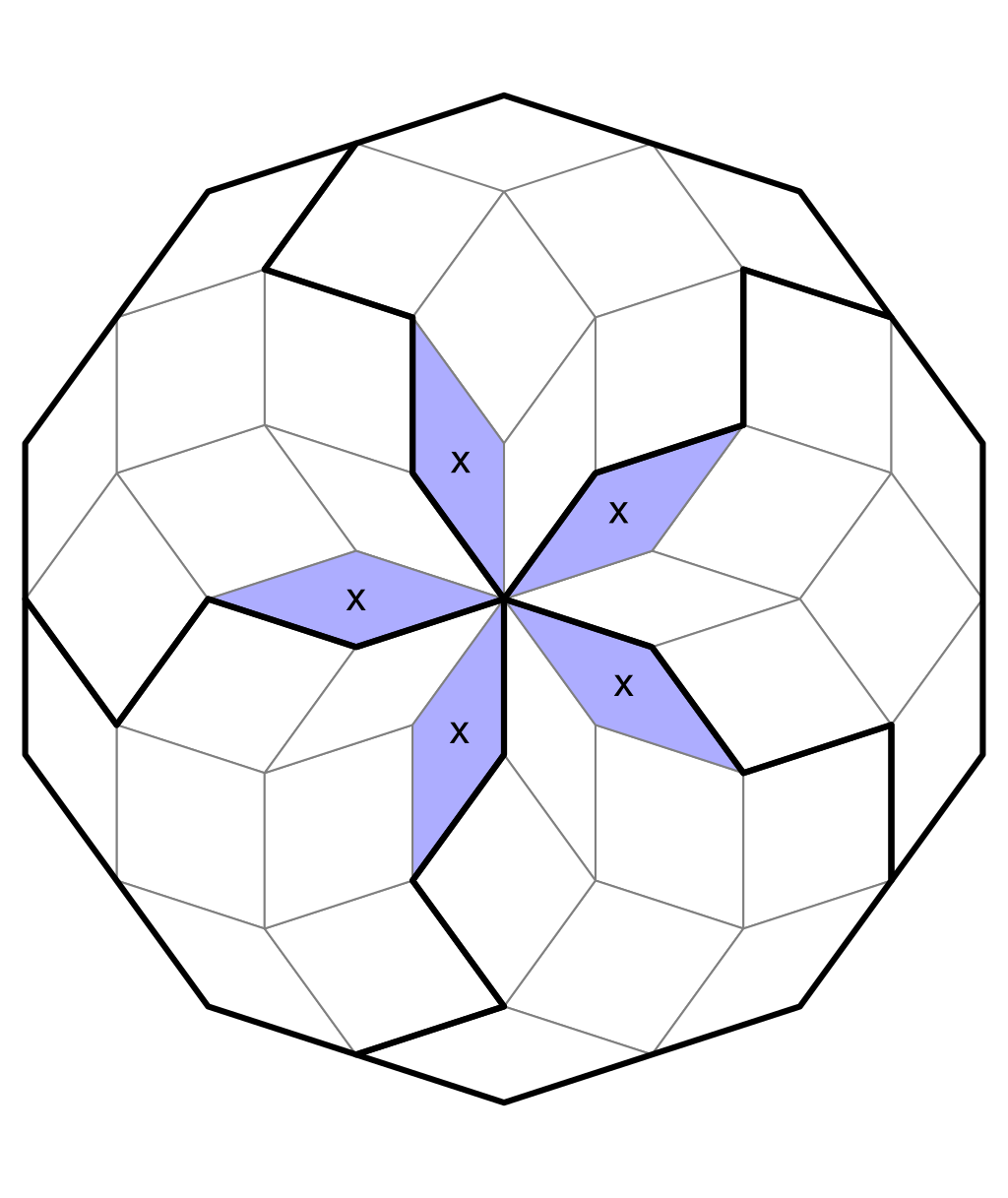
Consider the blue highlighted cells in the Sudokutope board above. The Central Pinwheel Match Lock technique says that, in a valid Sudokutope board, all five of these cells must have the same value.
Proof of the technique
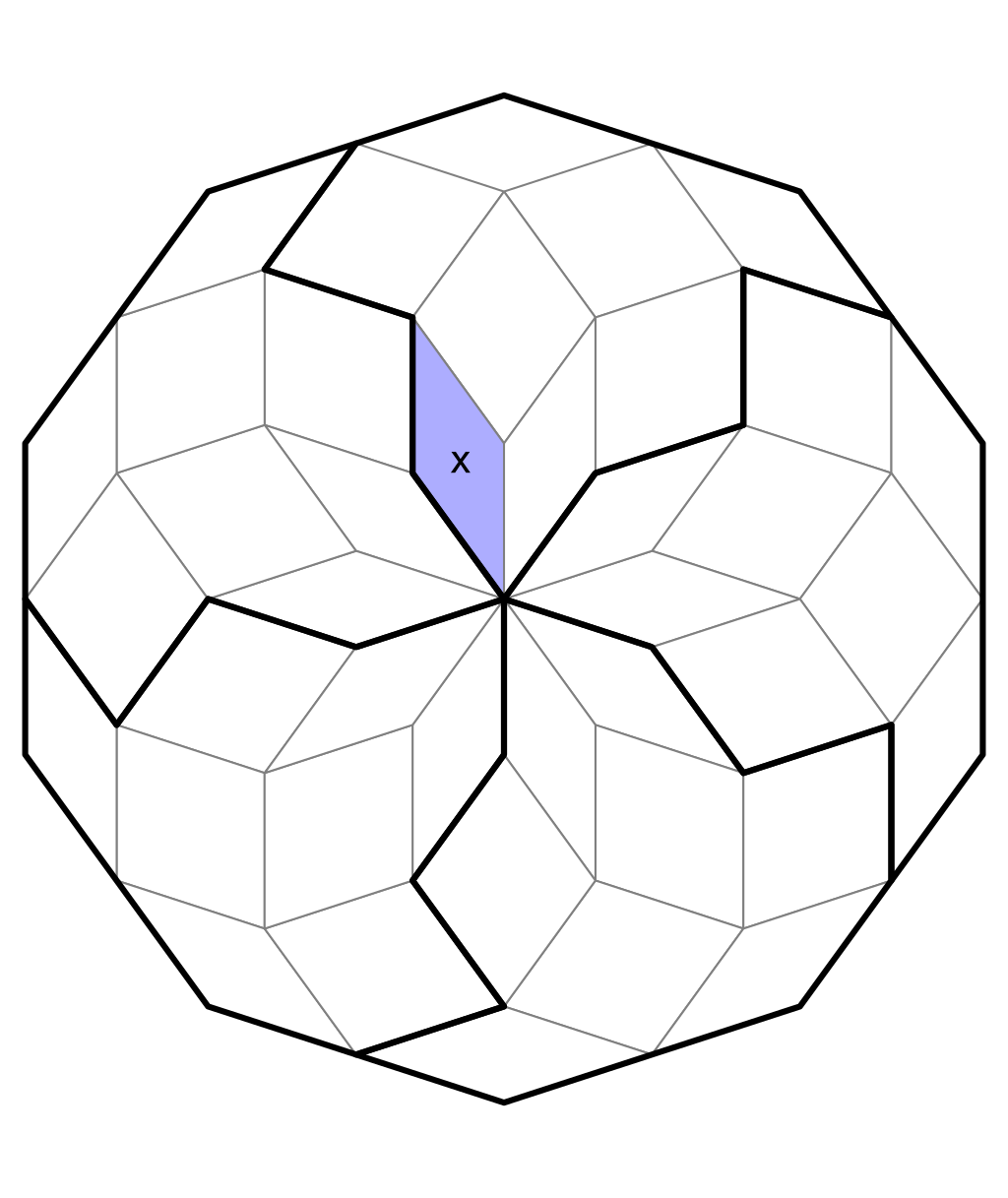
Let us assume to begin with that the blue highlighted cell in the image above has a value of x, for some x from 1 to 8. Then we'll show that the same value must be in the outlined cell in the image below:
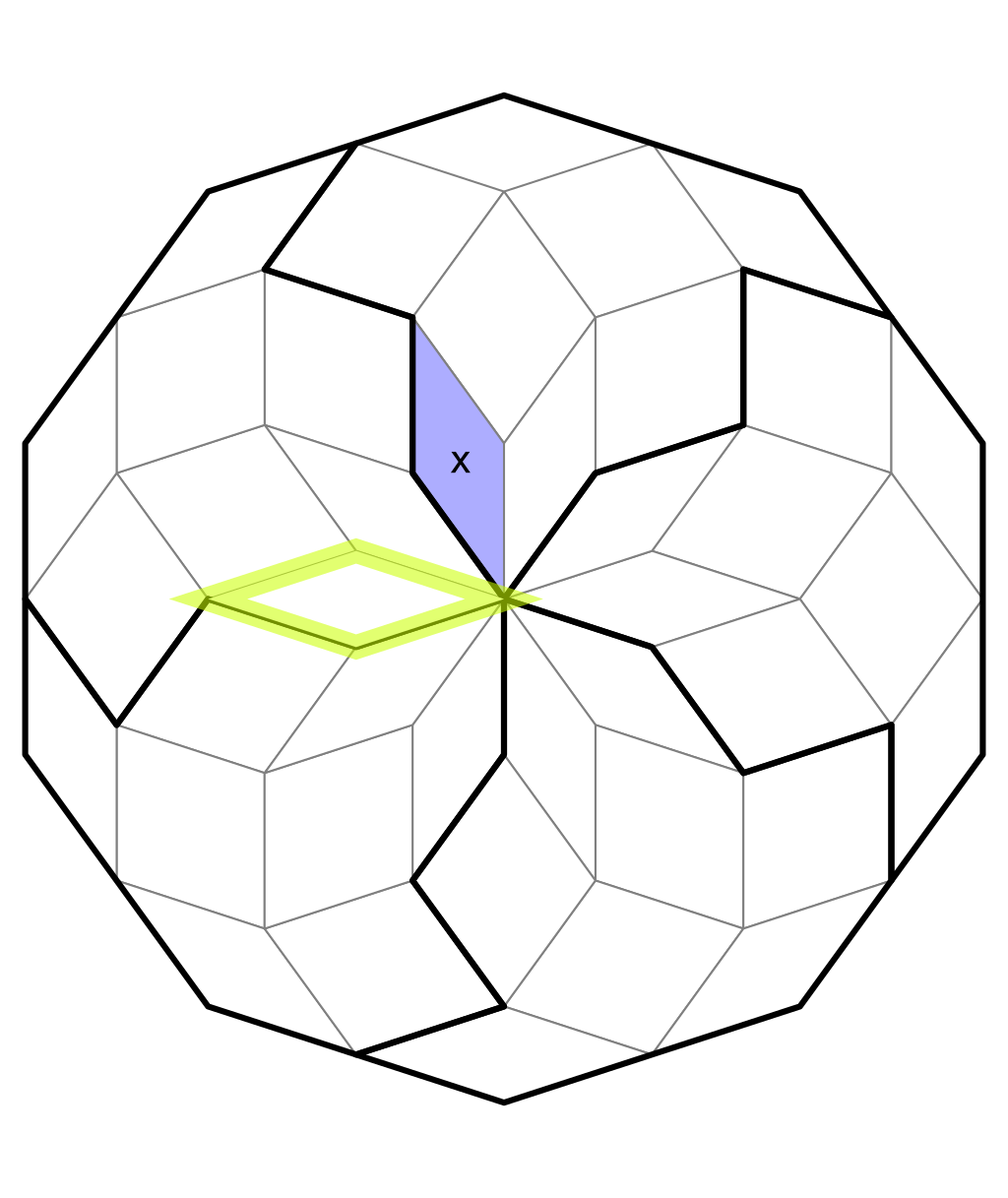
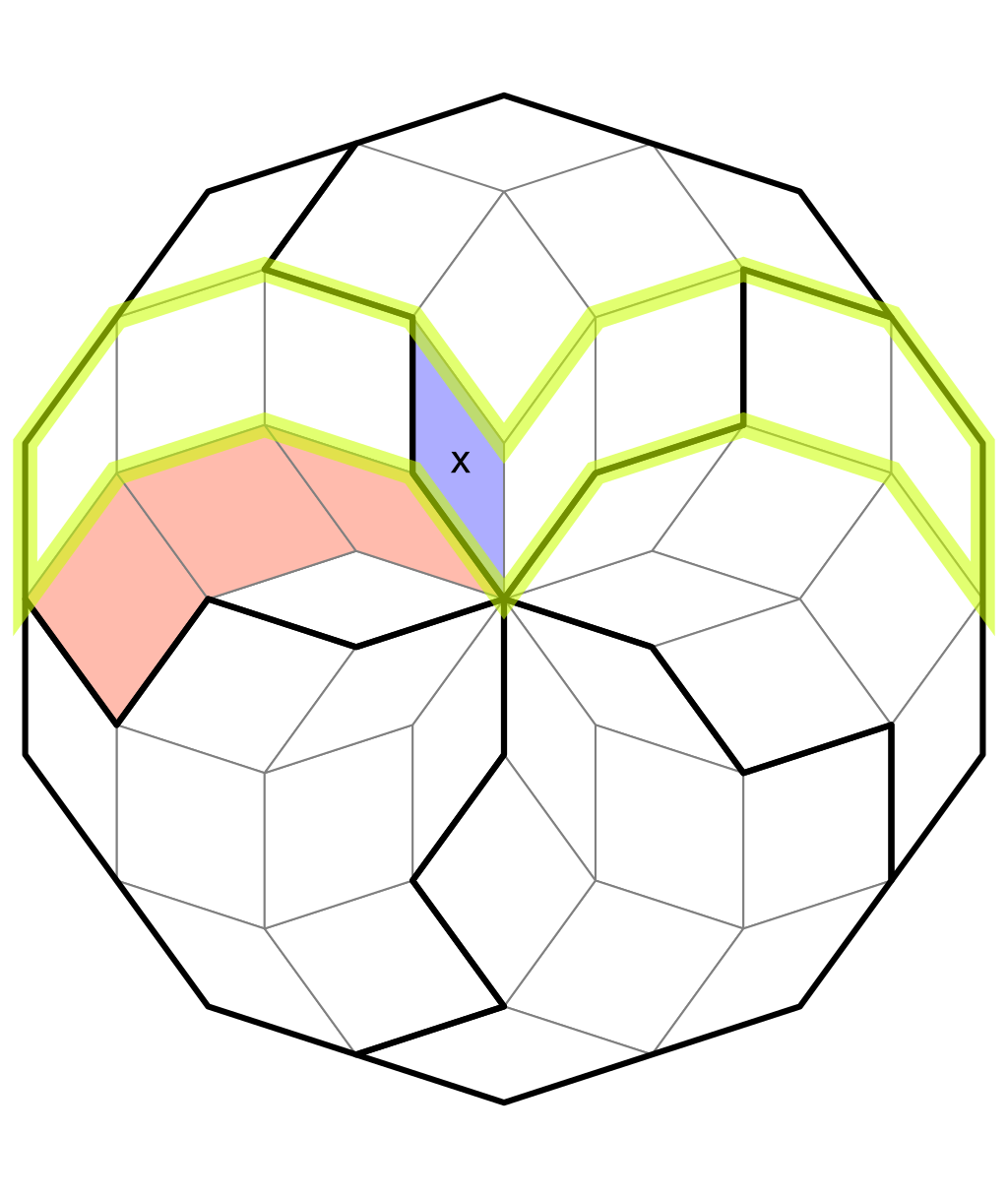
As a first step, consider the outlined row in the first image below. We've assumed that it already contains an x in the blue cell, so none of the other cells in that row can contain x. In particular, the three cells highlighted in red in the second image cannot contain x.
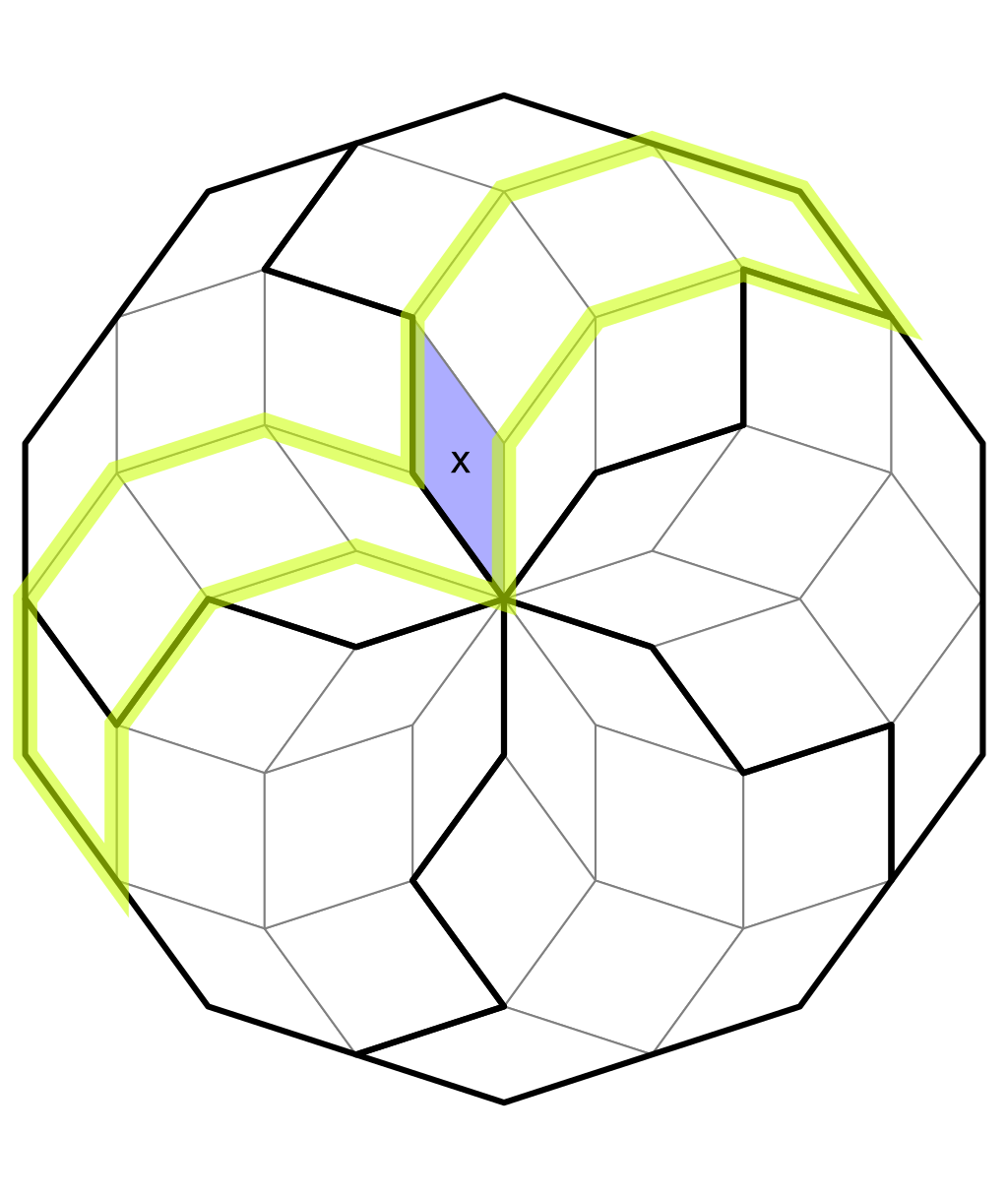
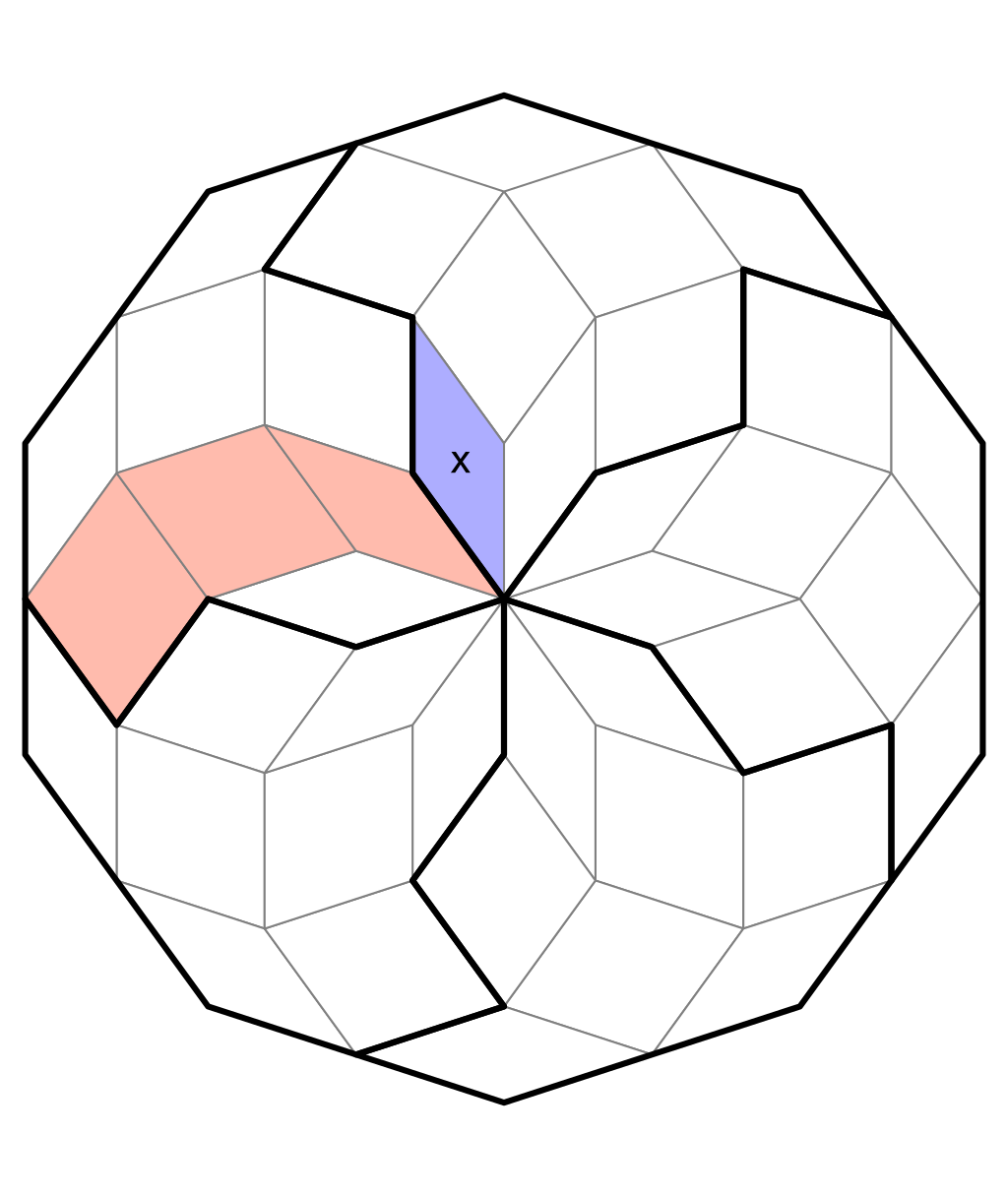
Now consider the second row containing the blue cell. This row is outlined in the first image below. Since it already contains an x in the blue cell, no other cell in that row can contain x. In particular, the three cells highlighted in red in the second image below cannot contain x.
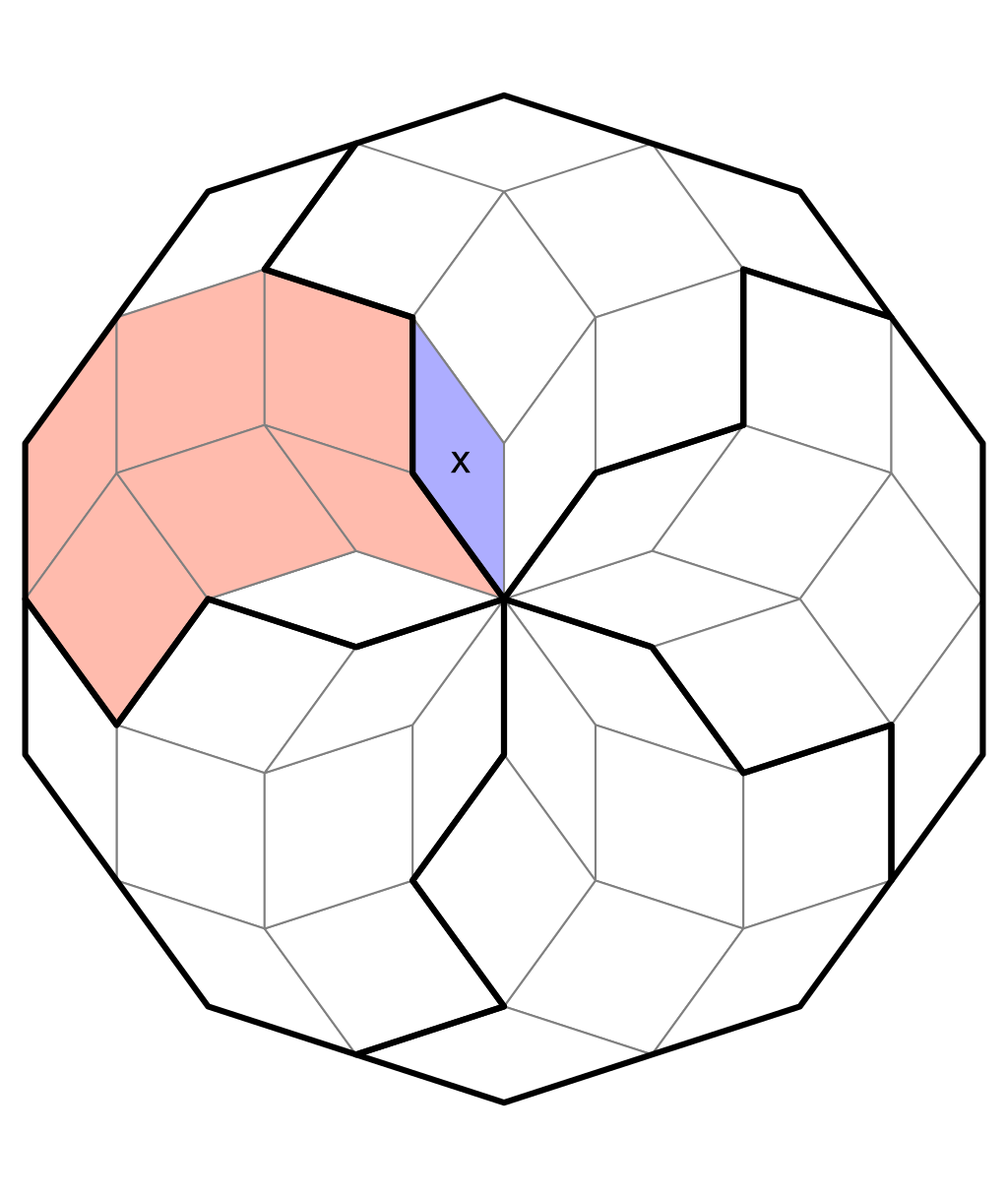
At this point, we've identified six cells in the same block that cannot contain x. This only leaves two cells in that block where the x can be located; these cells are outlined in the image below:
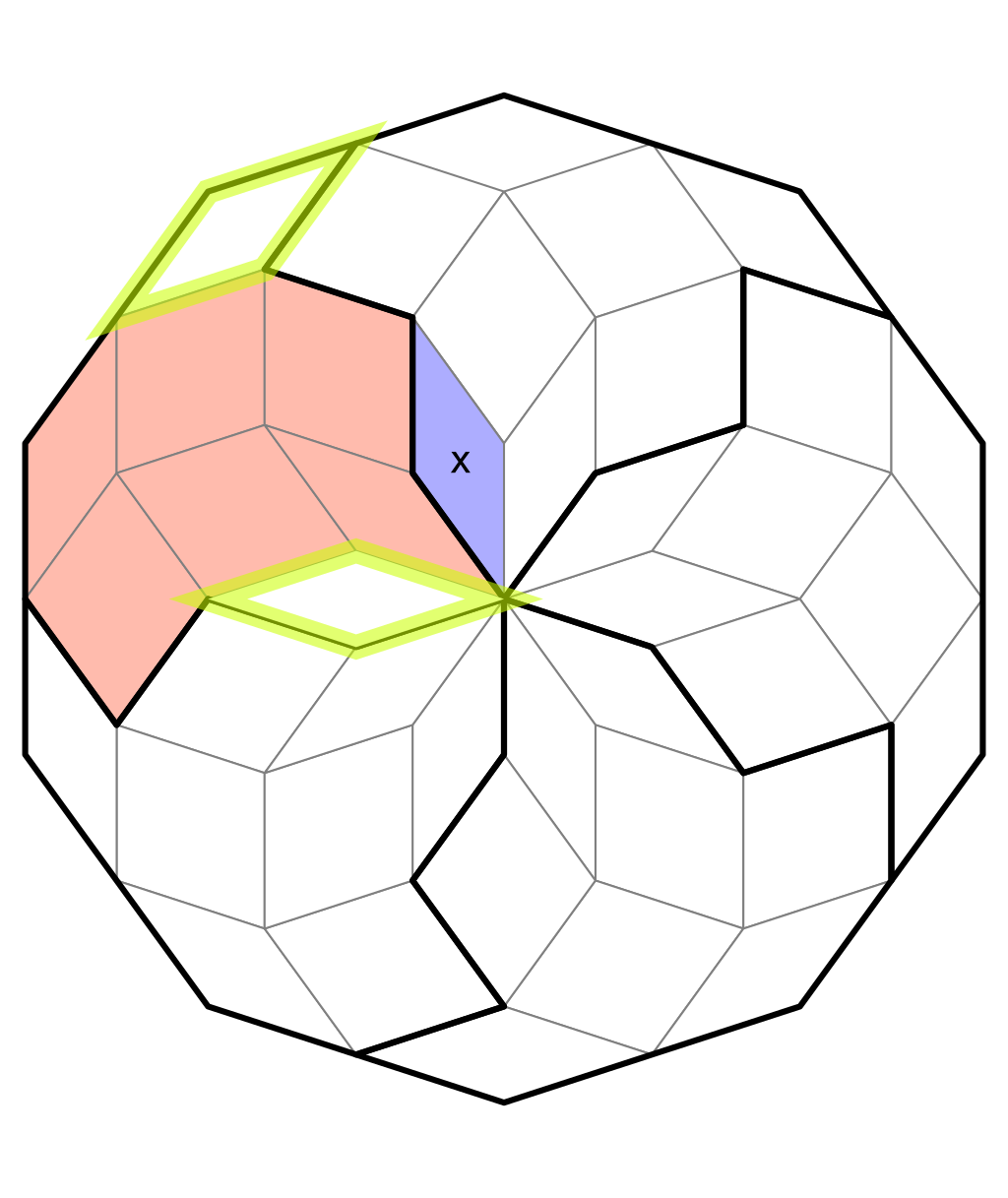
The lower of these two outlined cells is the one we have claimed must contain an x. To prove that this is the case, we must show that the upper outlined cell (outlined in the image below) cannot contain x.
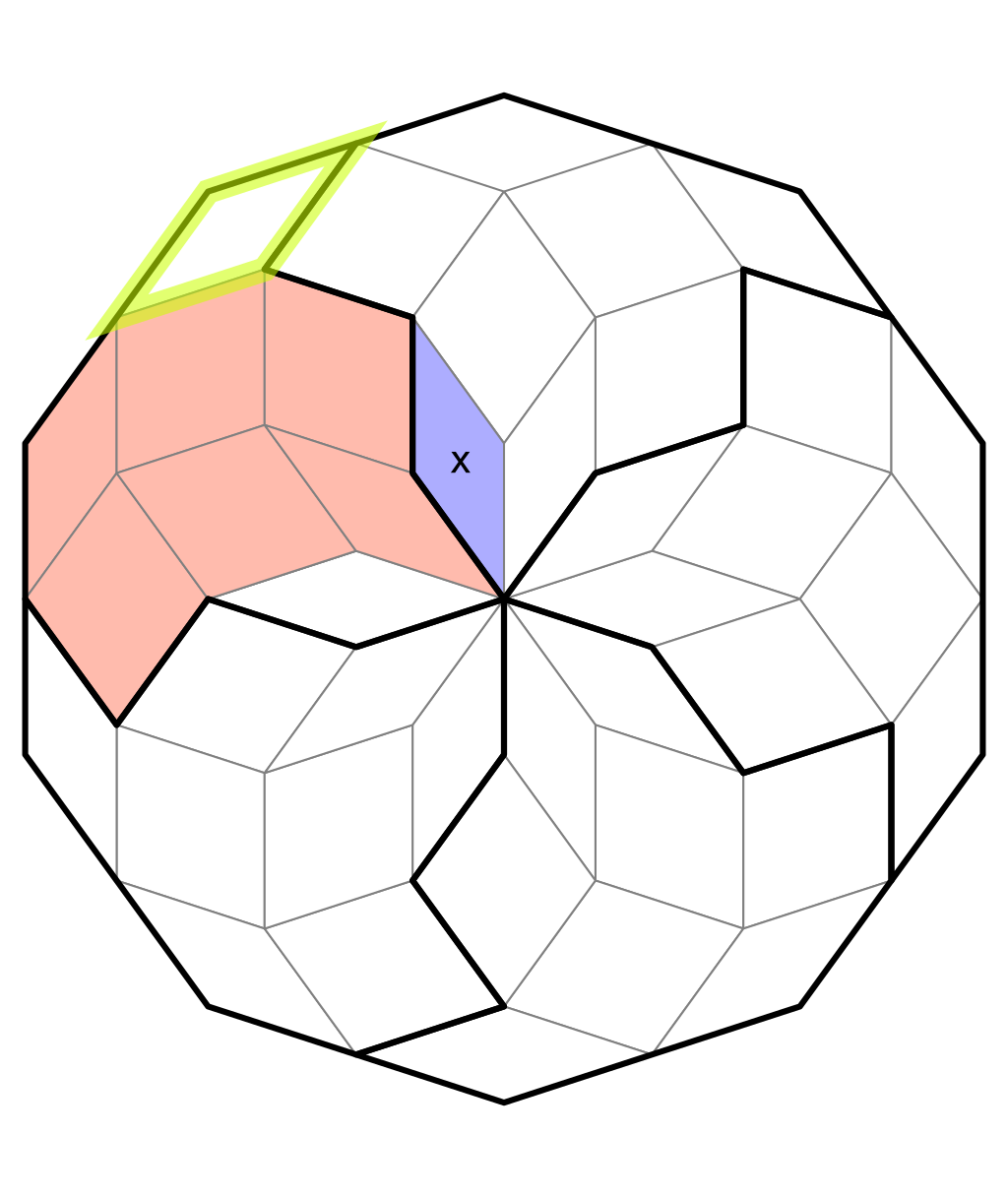
In a previous post, we proved the Rim-Span Match Lock technique, which says that the two outlined cells in the image below must have the same value.
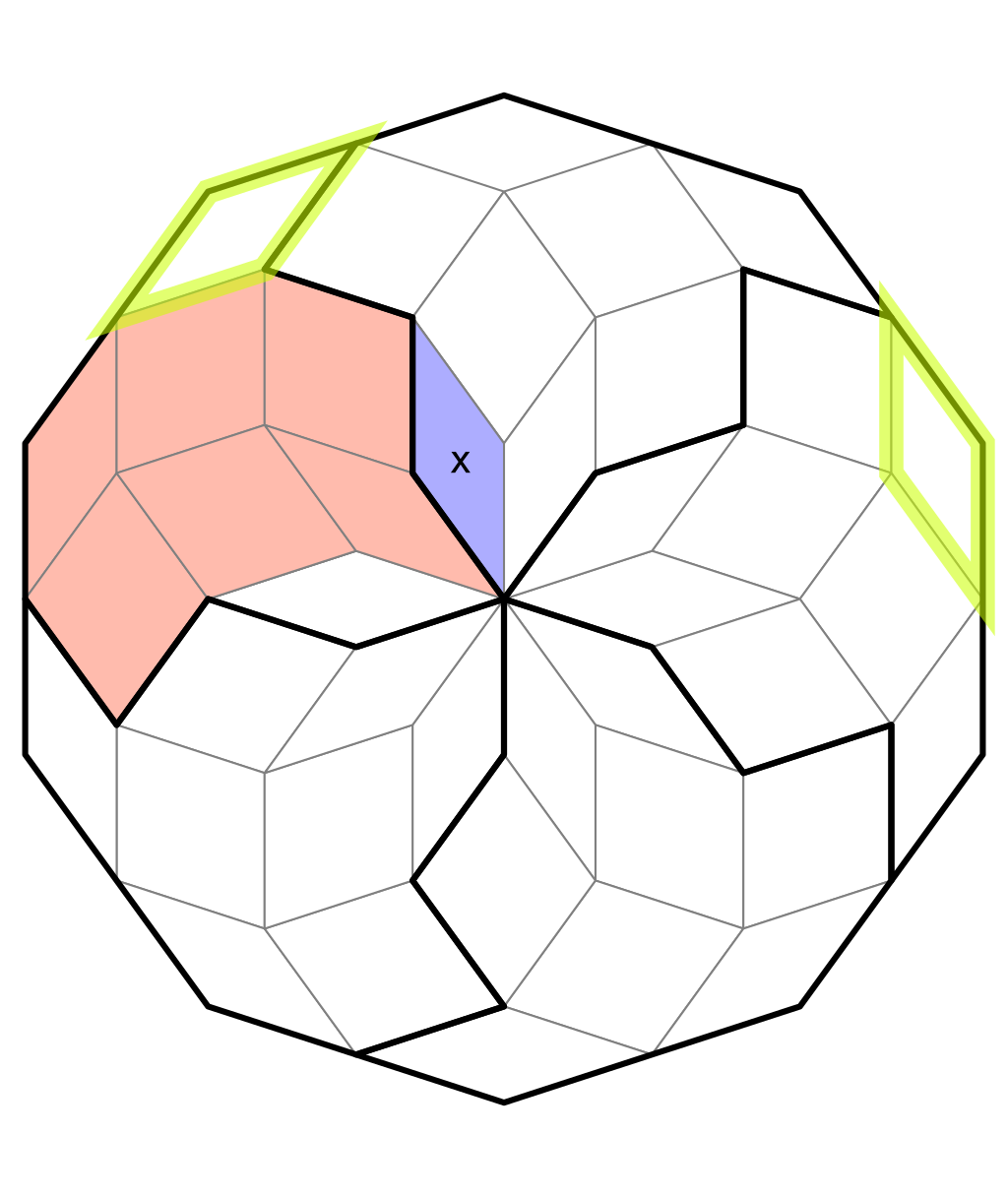
The second of these cells lies in the same row as the blue cell—this row is outlined in the image below. As the blue cell already contains an x, no other cell in that row can contain x. In particular, we have highlighted in red the cell that we are interested in.
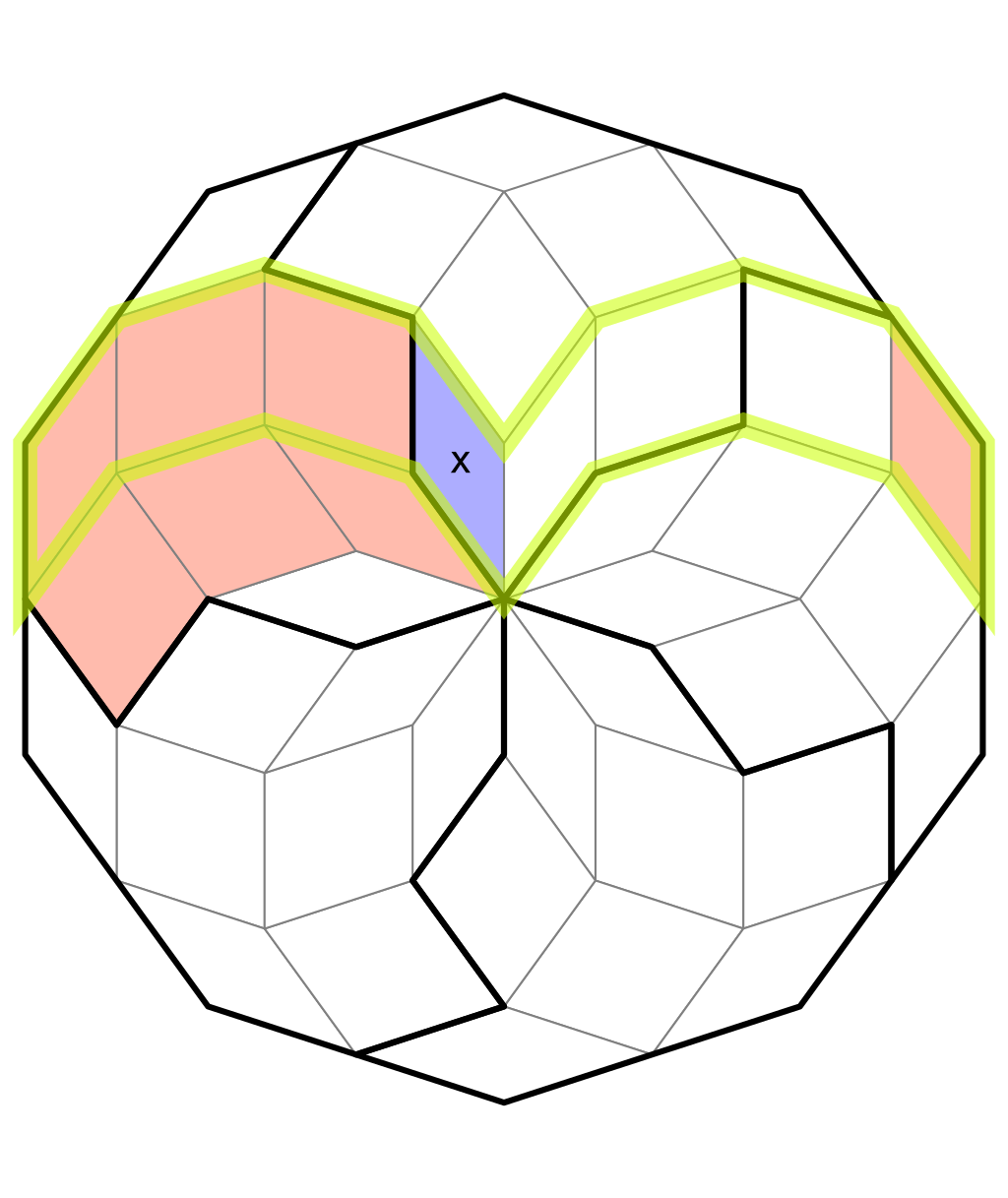
Again, by the Rim-Span Match Lock technique, the two outlined cells in the image below must have the same value. As we know that one of them does not contain an x, the other cannot contain x either.
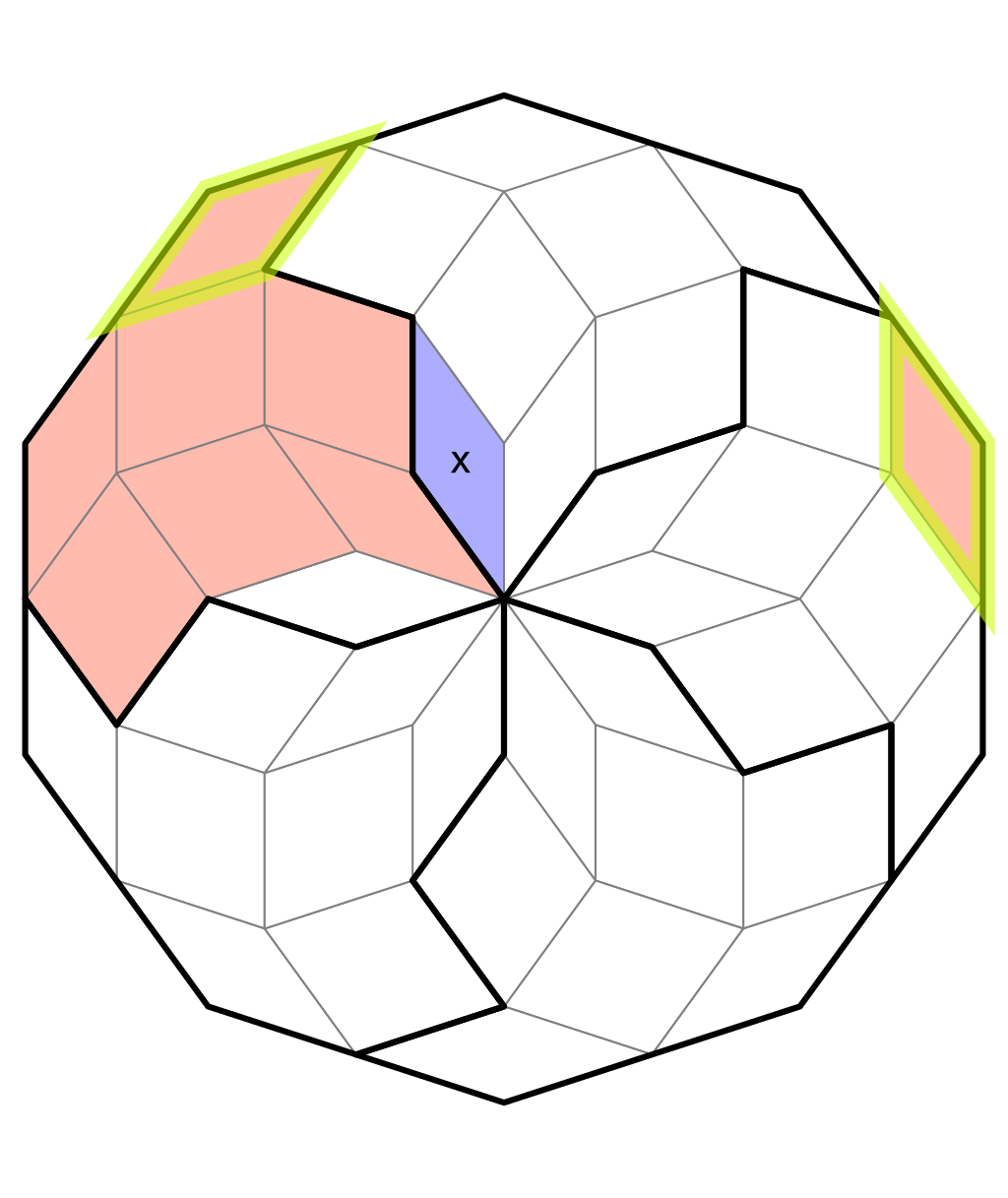
This leaves only one cell in the block where the x can be placed; this cell is outlined in the image below.
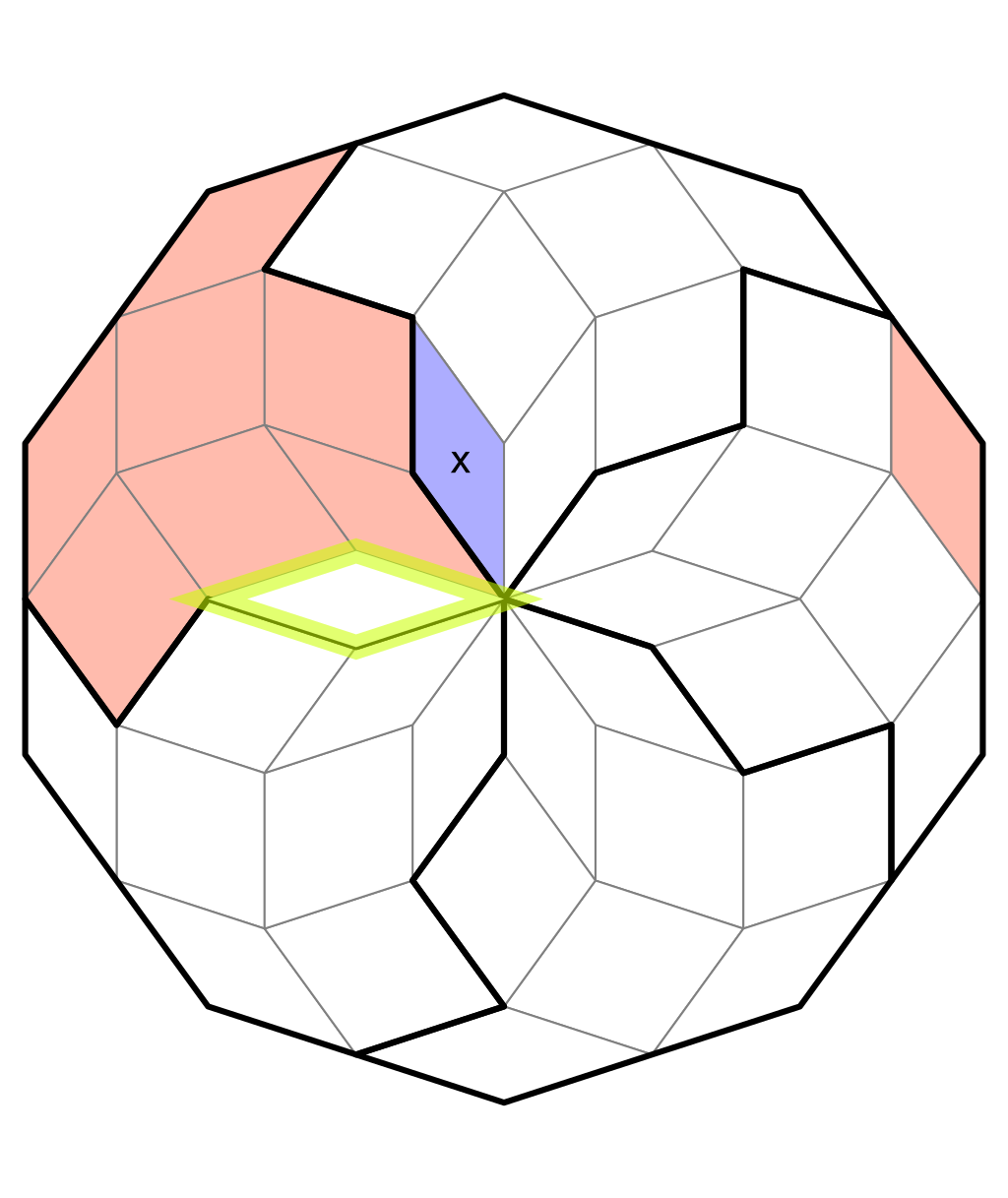
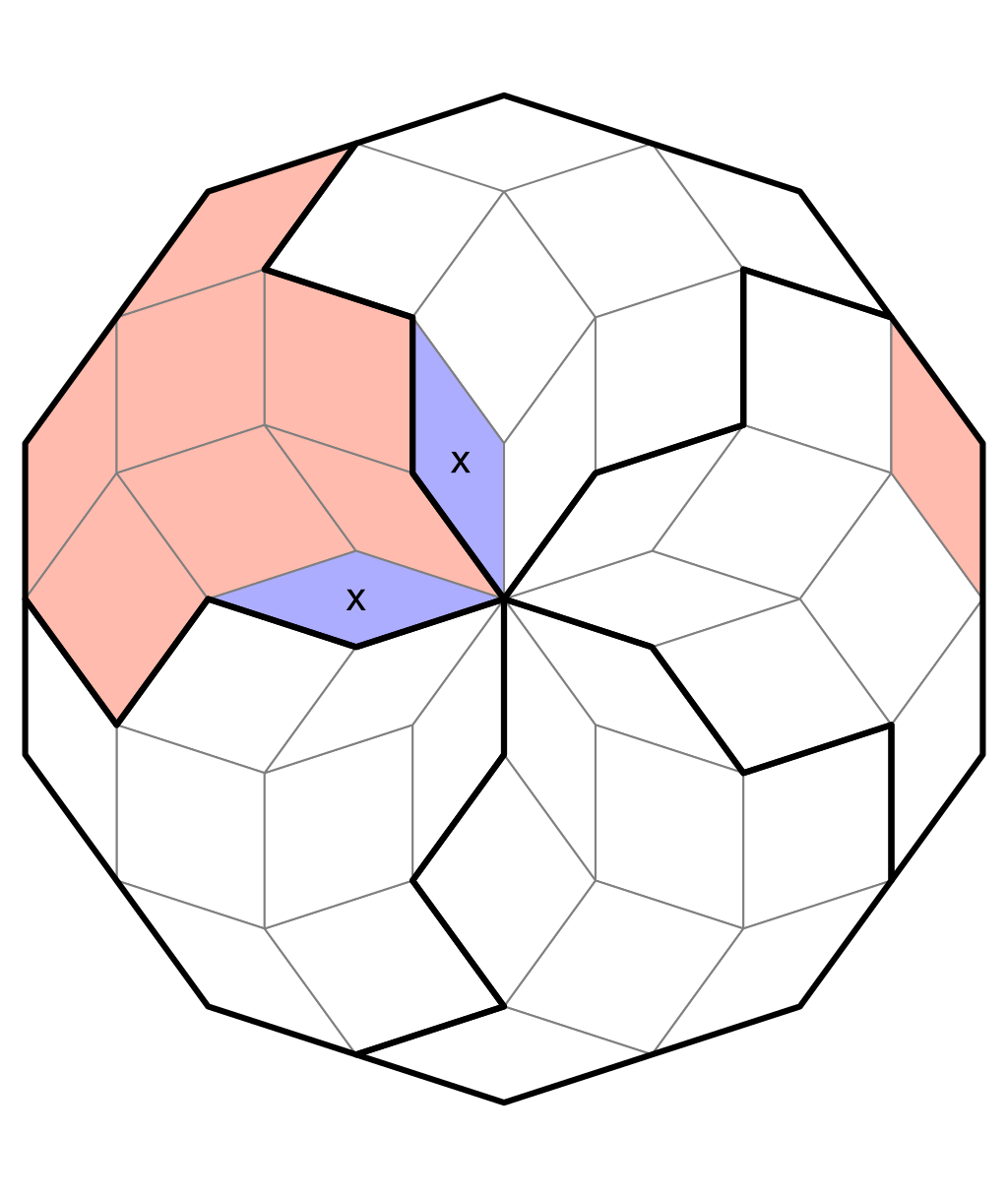
This proves our first claim: the two cells highlighted in blue below must both have the same value, x.
Rotational symmetry
To recap what we've shown so far: the two blue highlighted cells below must have the same value, x.
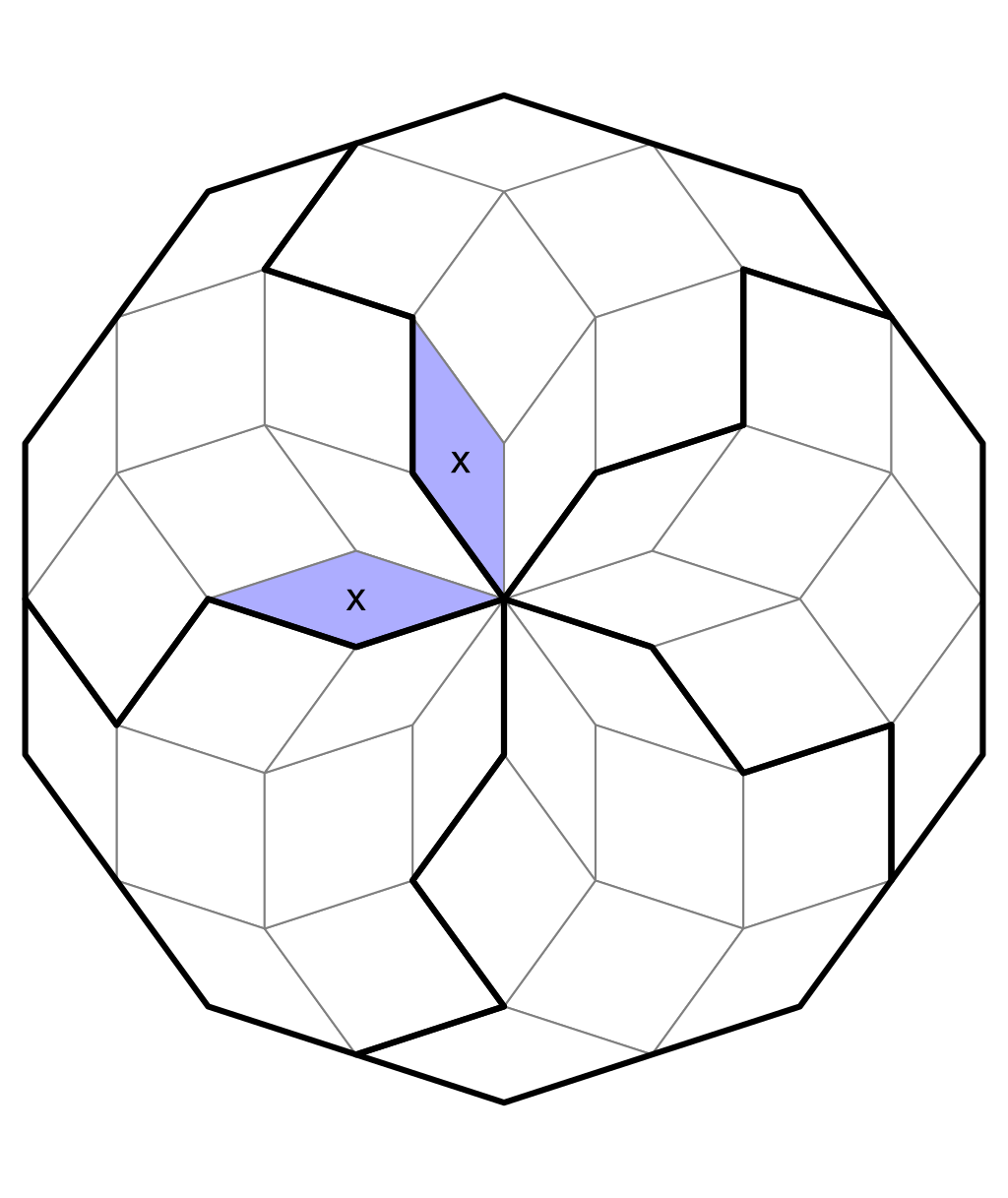
But the easy Sudokutope board has rotational symmetry, so the same argument that we used to show that the two blue highlighted cells have the same value can also be applied to show that the two outlined cells, below, must have the same value:
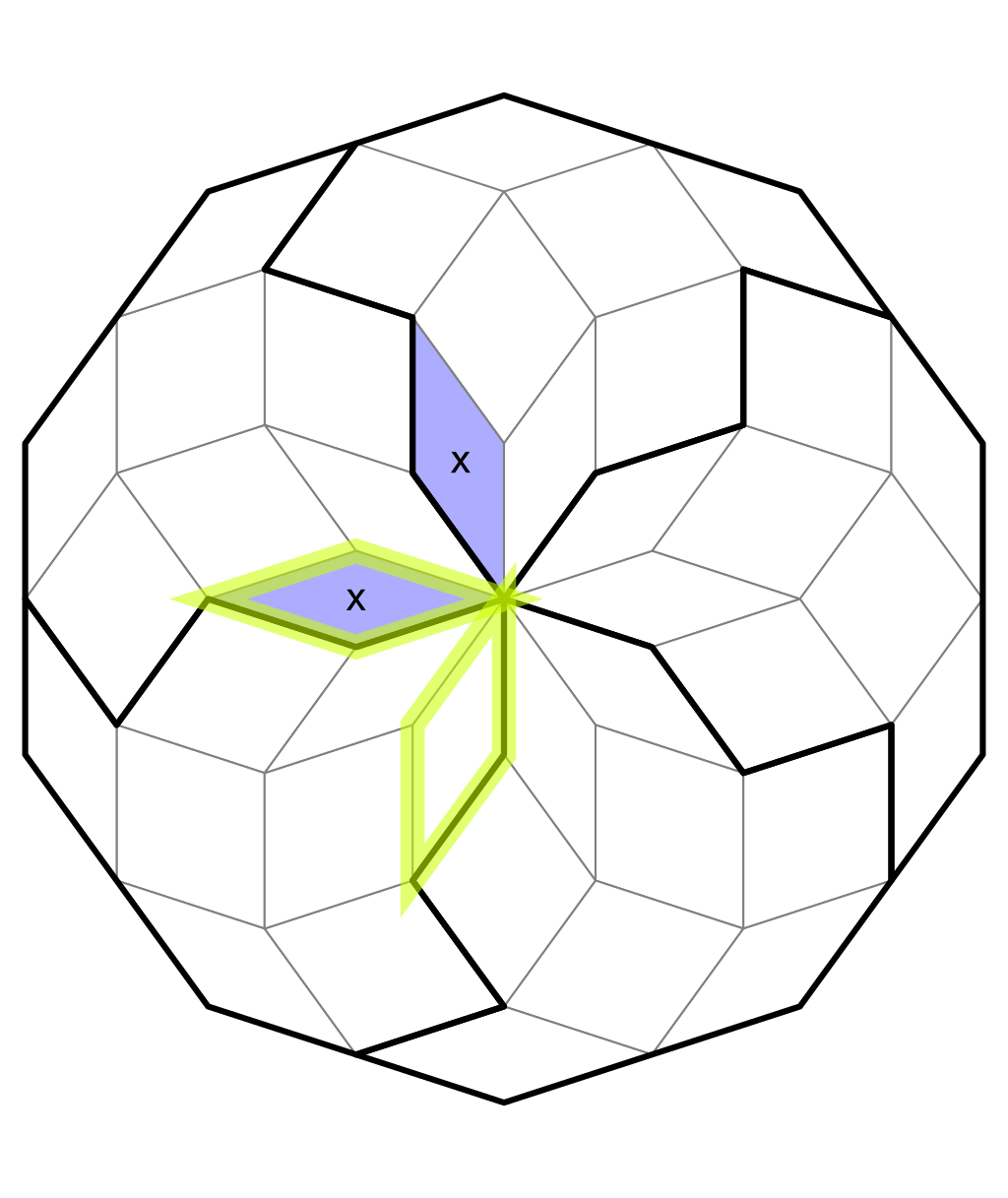
Since we know that the first of those cells contains the value x, the other must contain the value x as well.
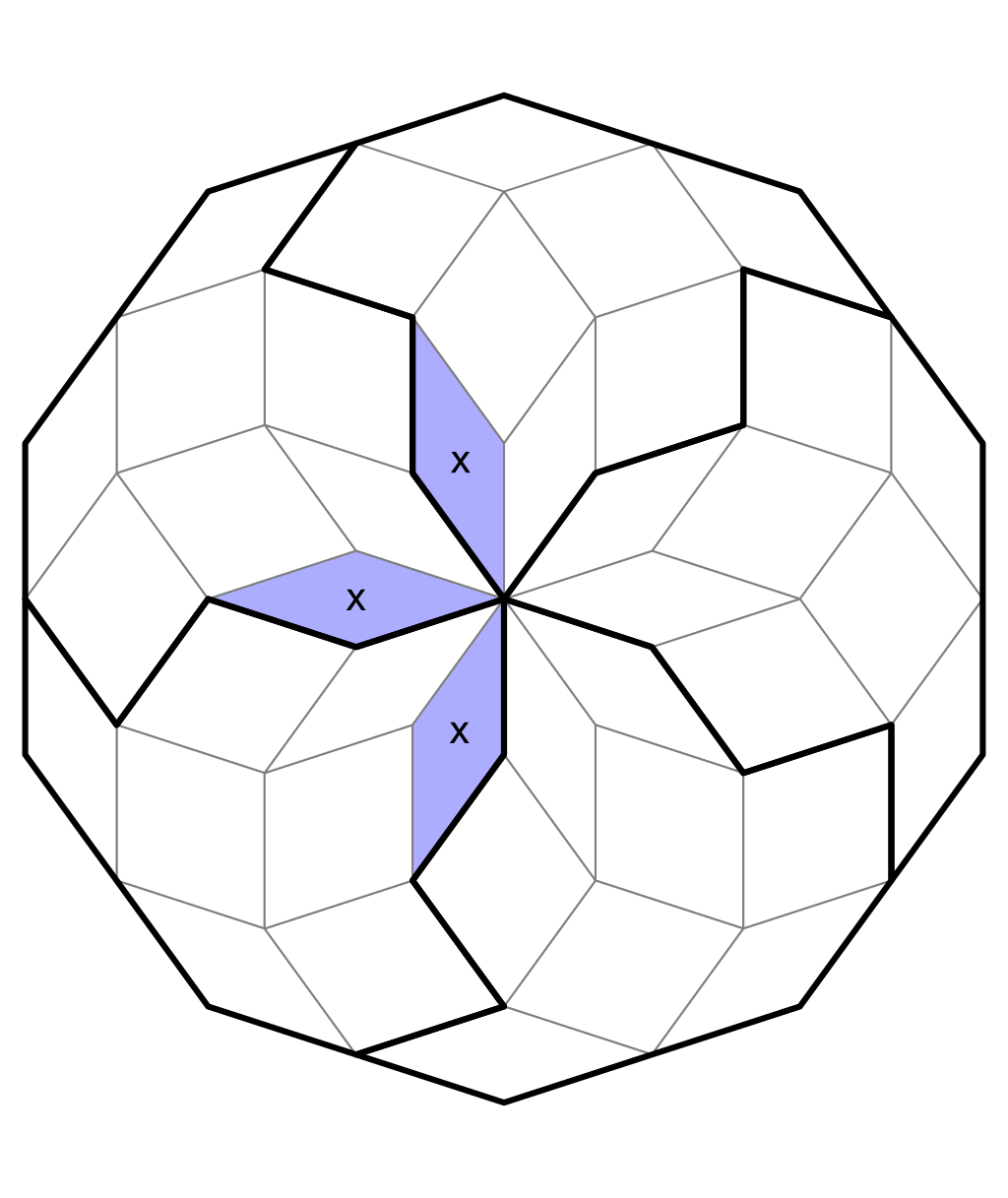
Similarly, the two outlined cells in the image below must have the same value:
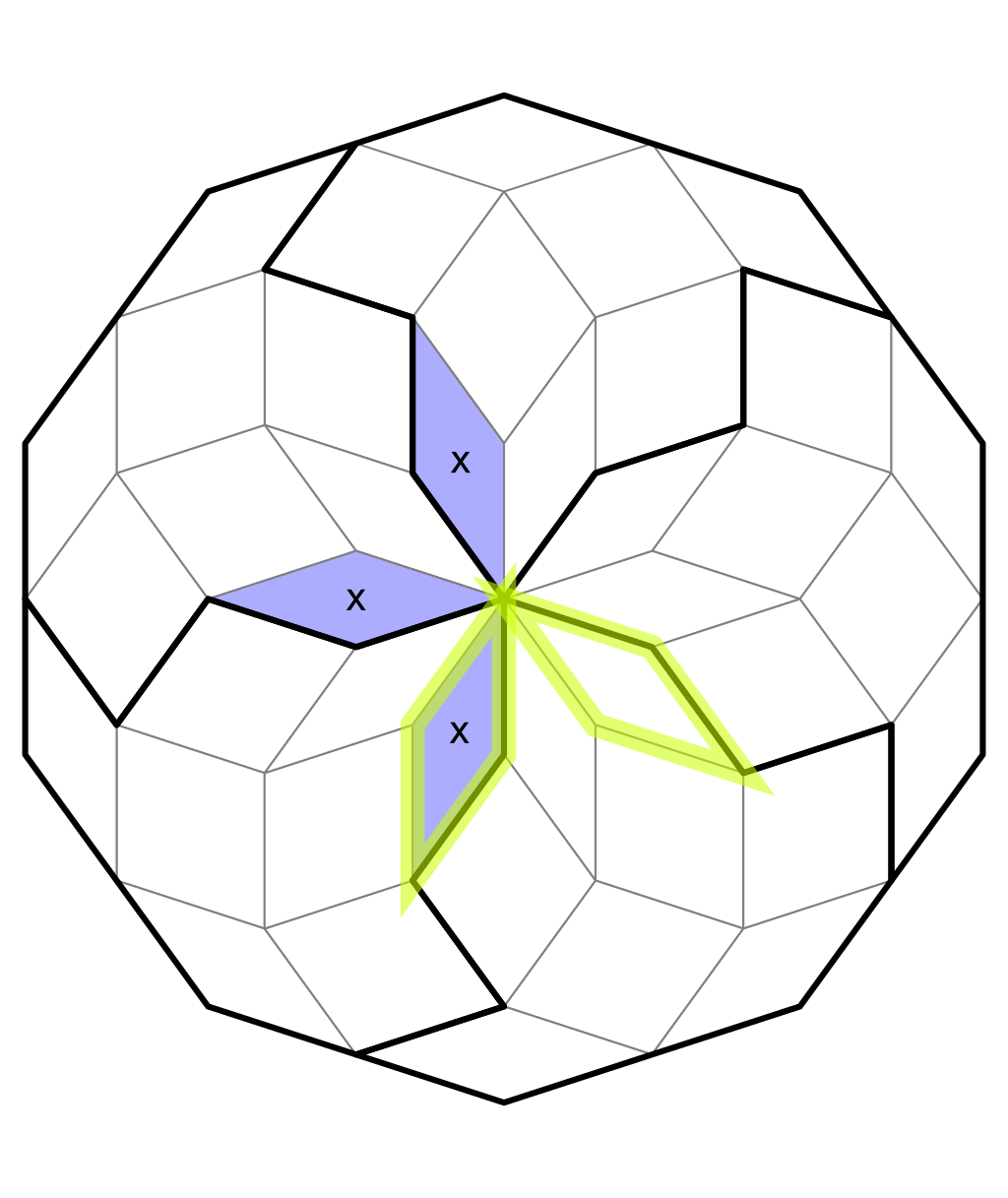
Since we know that the first of those cells contains the value x, the other must contain the value x as well.
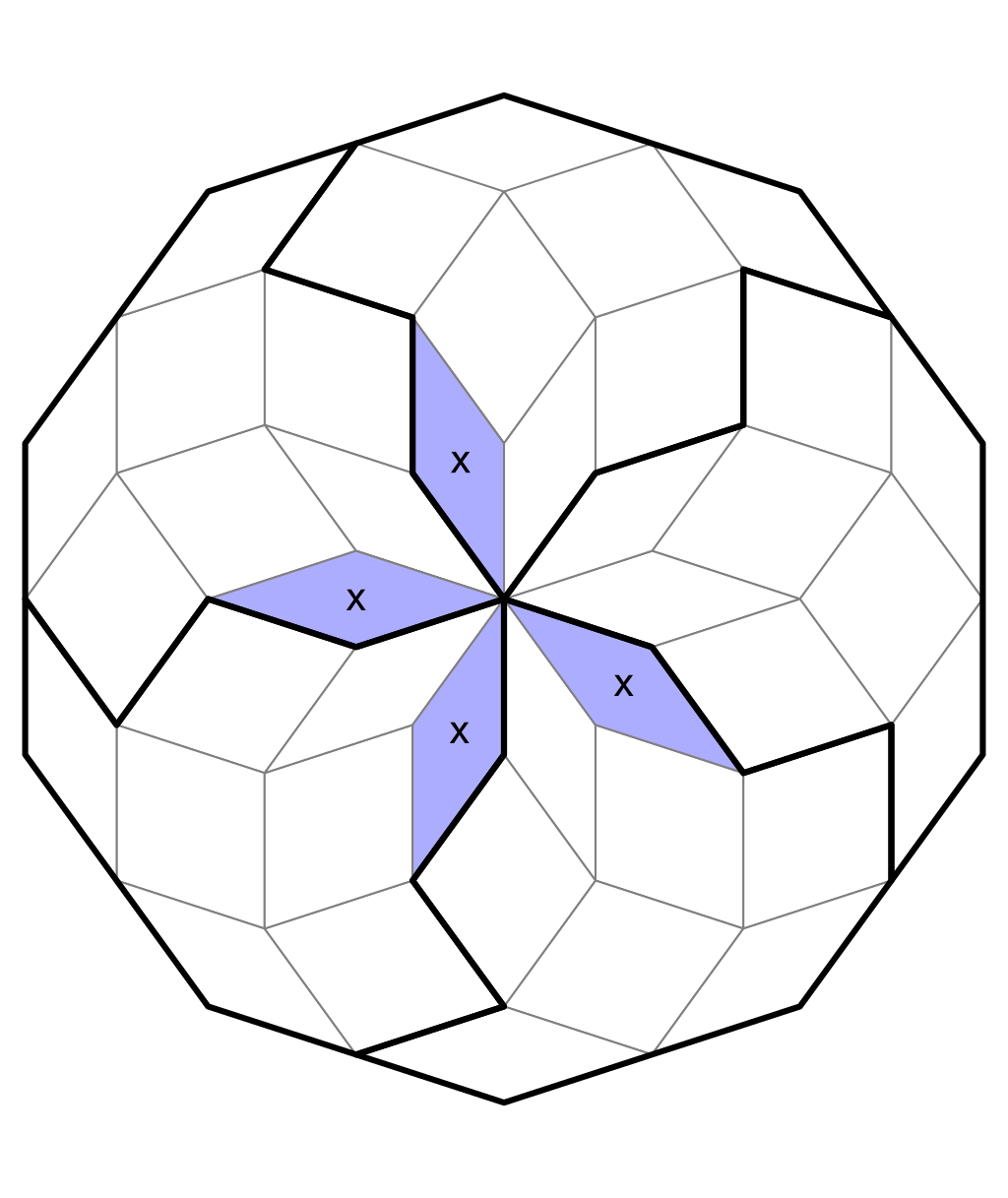
Finally, the same argument applies once again to show that the fifth cell must have the value x as well.
Conclusion
We've shown that the Central Pinwheel Match Lock technique is always true in a valid Sudokutope board. This technique allows us to fill in the value x in five cells at once, which is a powerful tool for solving Sudokutope puzzles.
Note that this technique only applies to five out of the ten central cells on the board. Specifically, it applies to the cells that share two edges with the boundary of the block that contains them. The Central Pinwheel Match Lock technique does not apply to the cells that share only one edge with the boundary of the block that contains them.
Previous: Sudokutope Techniques 1: Rim-Span Match Lock.