Sudokutope Techniques 1: Rim-Span Match Lock
Introduction
If you're familiar with Sudoku, you'll know various techniques for solving the puzzle, such as naked singles, hidden singles, X-wing, XY-wing, skyscraper, and many more. Sudokutope, the Sudoku game on a grid of rhombs, also has a rich set of inference rules, many of which arise from the unique geometry of the game board. This post introduces the first of these techniques: Rim-Span Match Lock, which identifies pairs of cells on the perimeter of the easy board that must always share the same value. Not only will we describe the technique, but we'll also prove that it is always valid.
The two cells
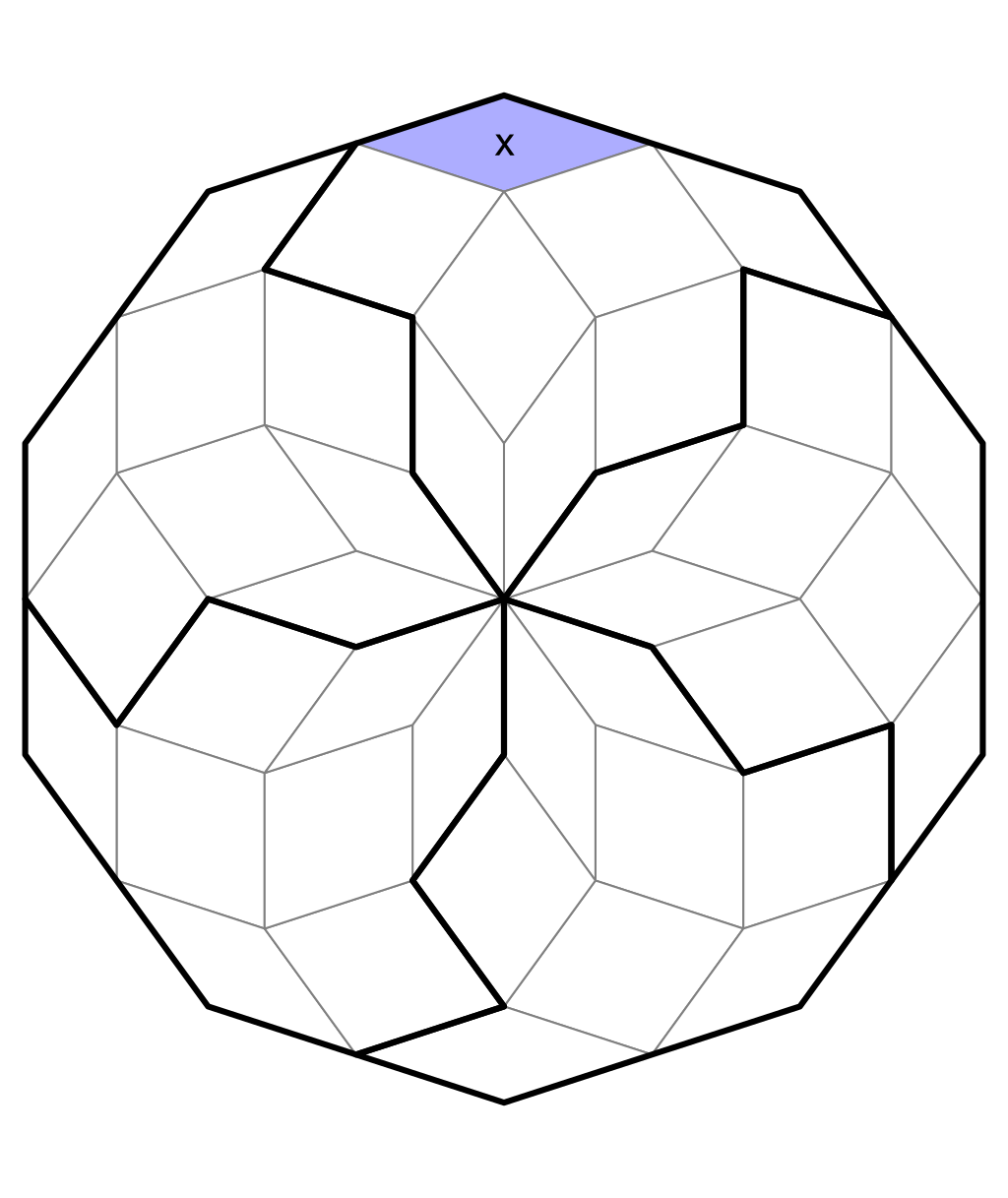
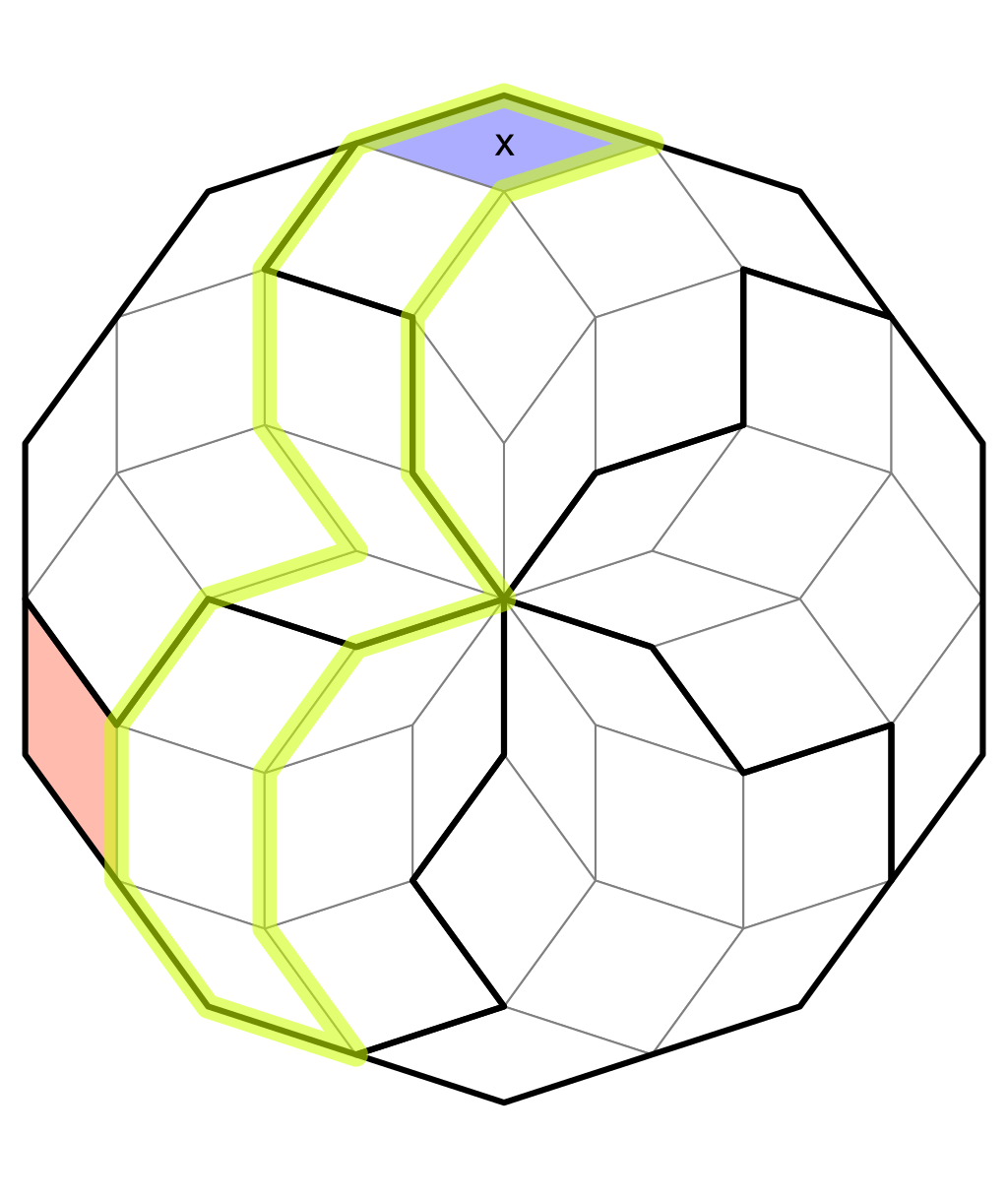
Consider the blue highlighted cell in the Sudokutope board above. Let's say that this cell has the value x, for some x from 1 to 8.
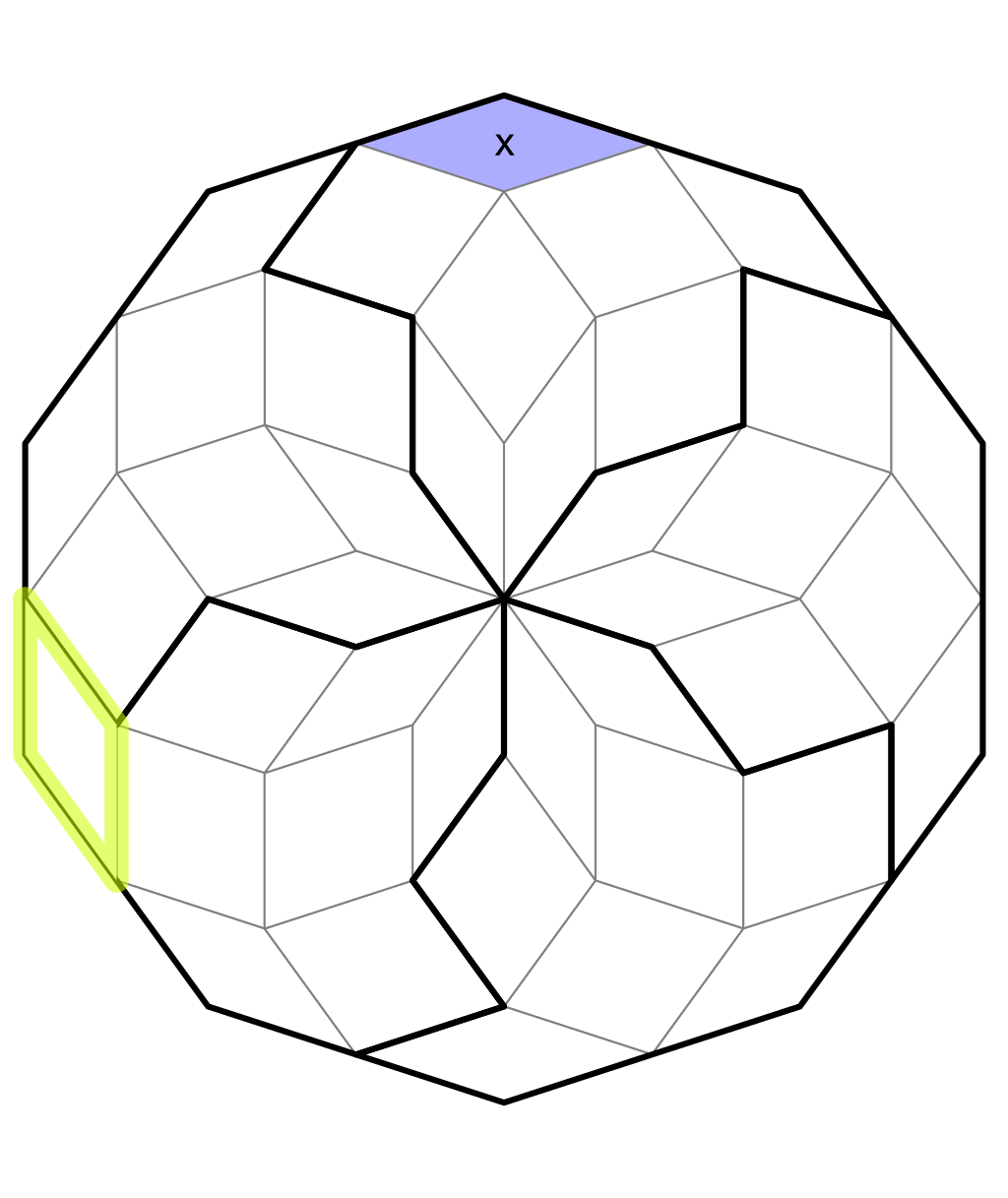
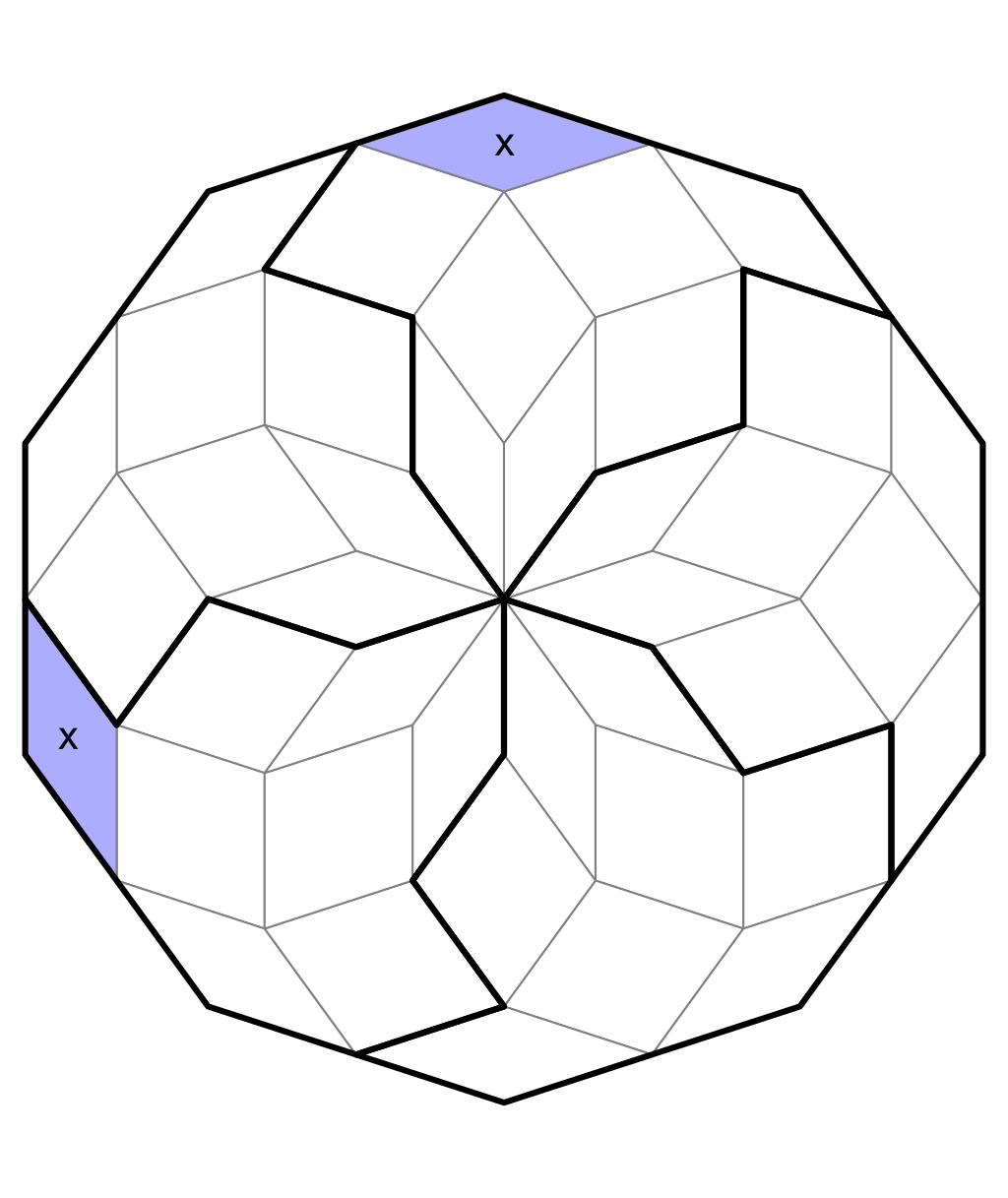
Throughout this post, let's use yellow outlining to draw attention to a particular cell or cells that we are discussing. In the image above, we've outlined one cell in yellow. The Rim-span Match Lock technique says that, in a valid Sudokutope board, if the first cell (in blue) has value x, then so too does the second cell (outlined in yellow).
Proof of the technique
Let us prove this by contradiction; that is, let us assume that the claim is false, and show that this assumption leads us by a chain of correct reasoning to a false statement.
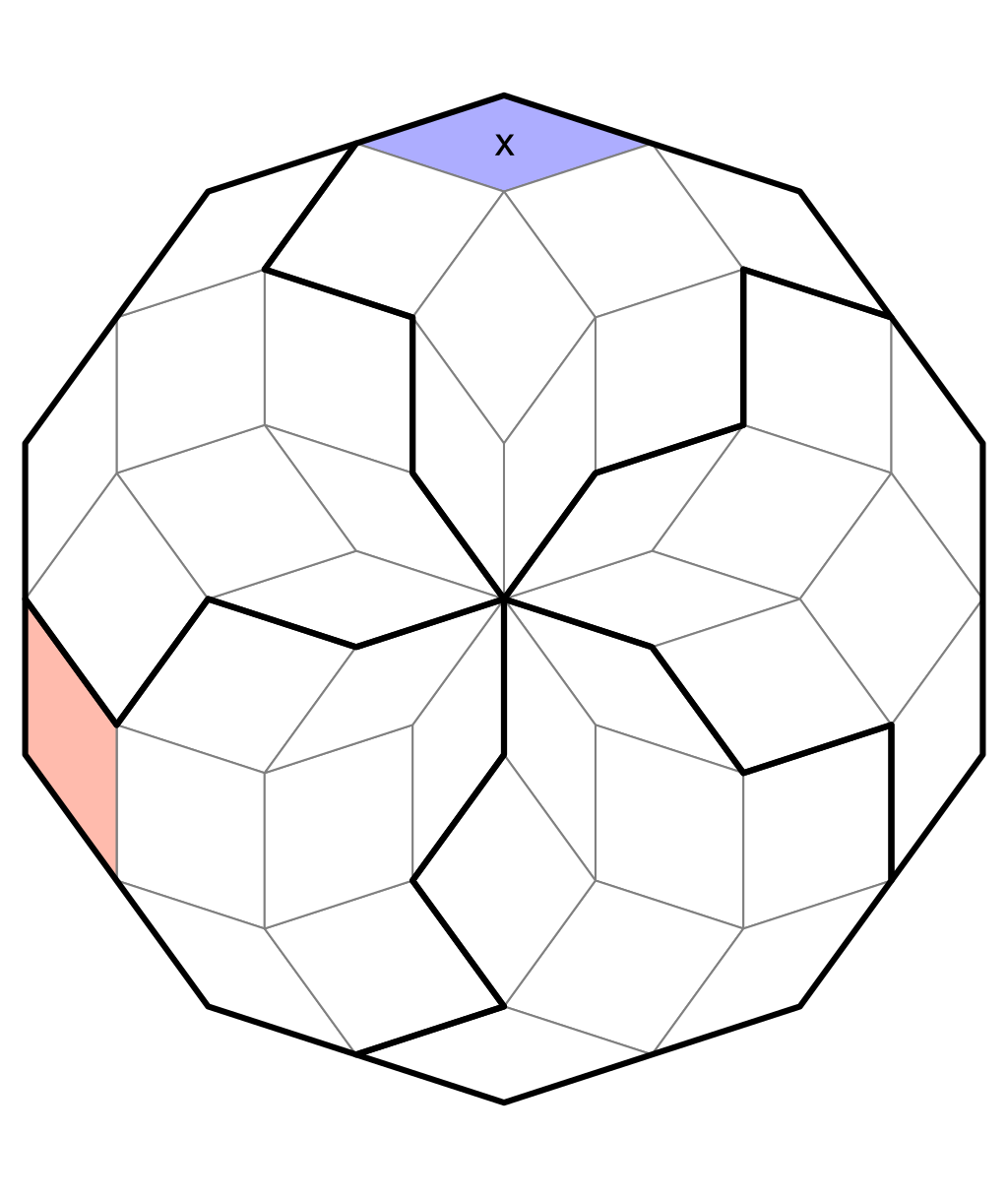
If the claim is false, then the second cell must have a value other than x. Let us mark cells that cannot have the value x in red, as in the image above.
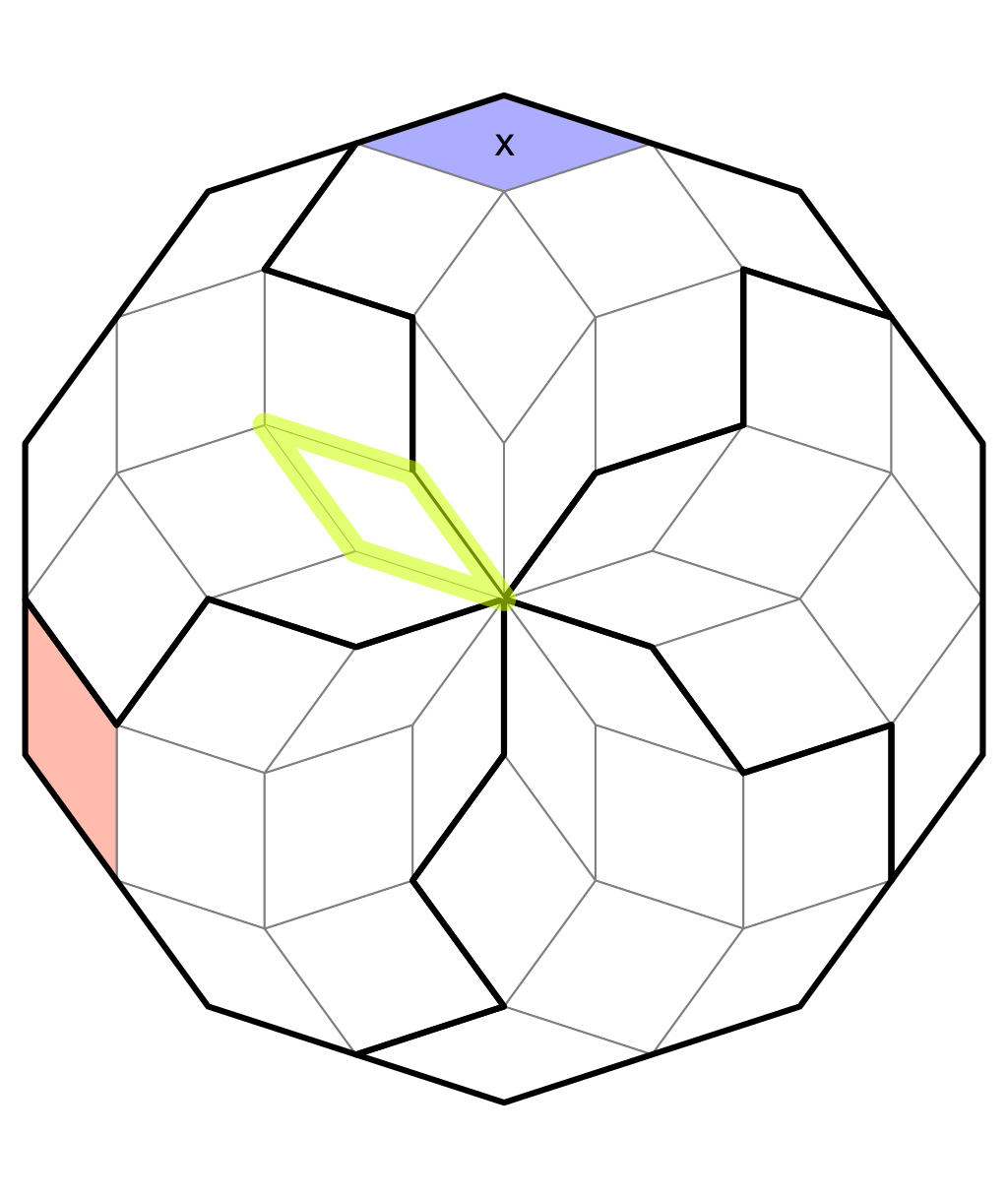
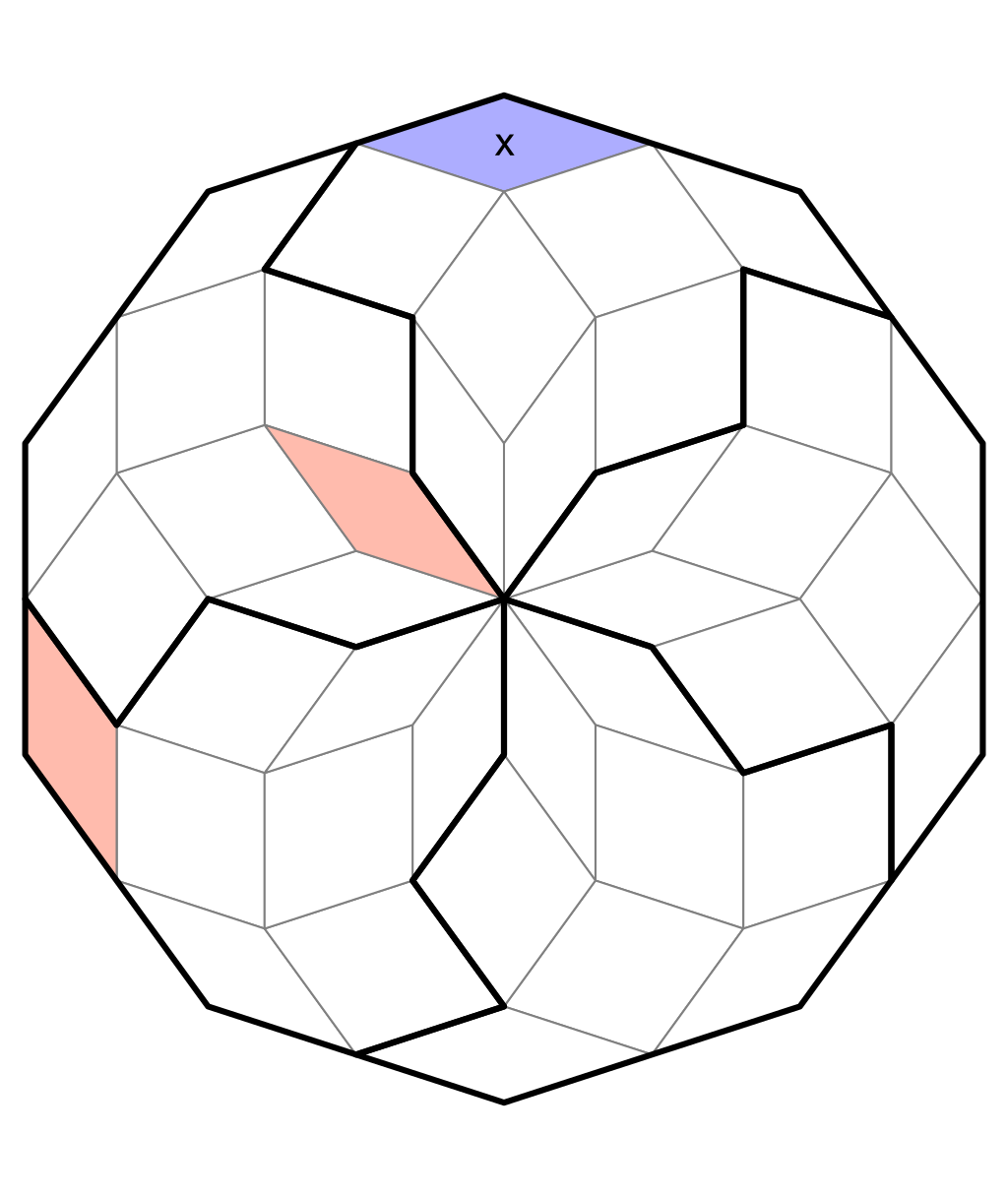
Now consider the cell that is highlighted in the first image above. It shares a common row with the first cell; we can see this common row highlighted in the second image above. Since no two cells in the same row can have the same value, none of the other cells in that row can have the value x. In particular, this means that the highlighted cell cannot have the value x. Let's mark that cell in red to indicate this fact:
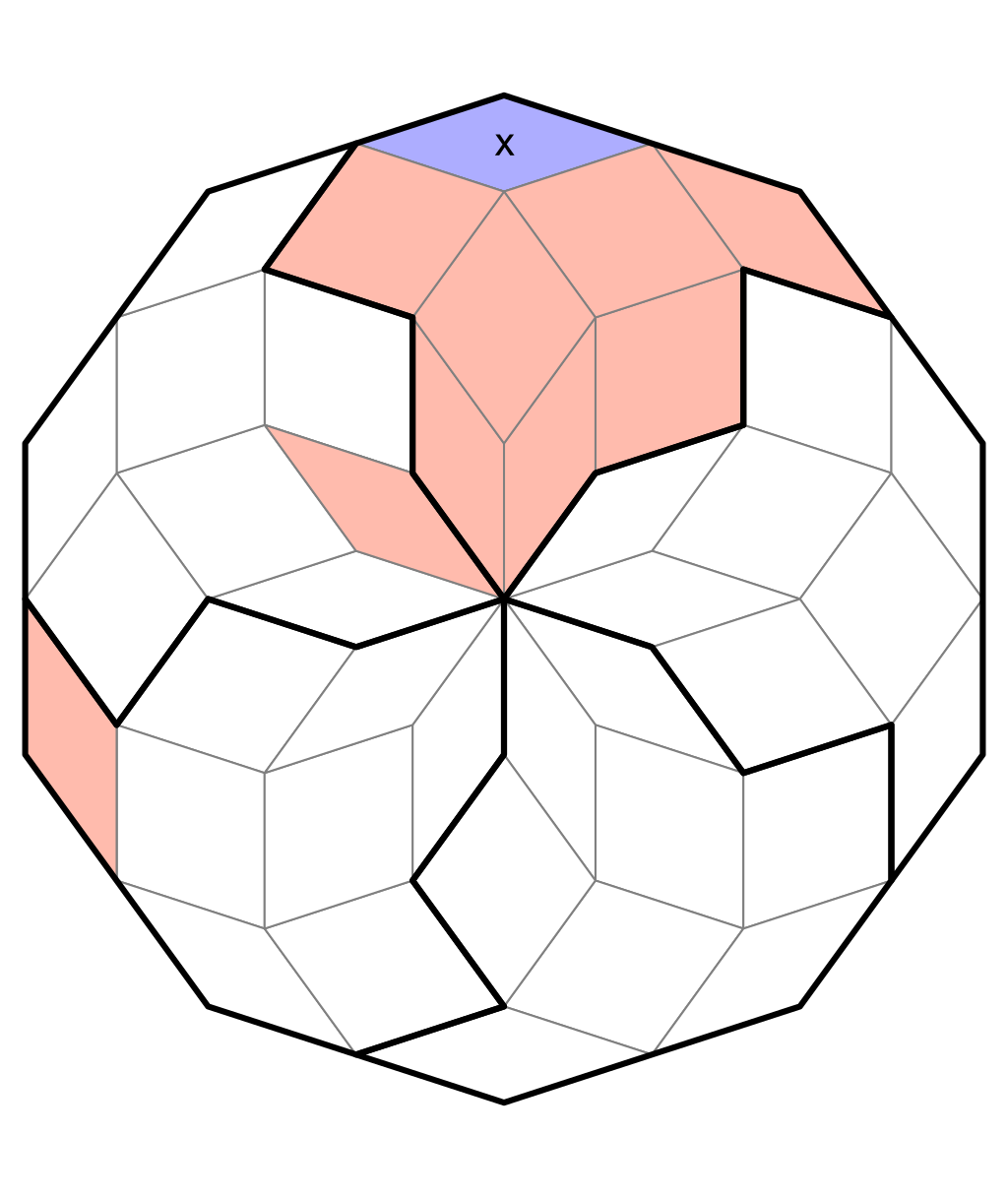
Another rule of Sudokutope is that no two cells in the same block can have the same value. Let's indicate this by marking all of the cells in the same block as the first one in red, to show that they cannot have the value x:
Now consider the row that's outlined in the image below:
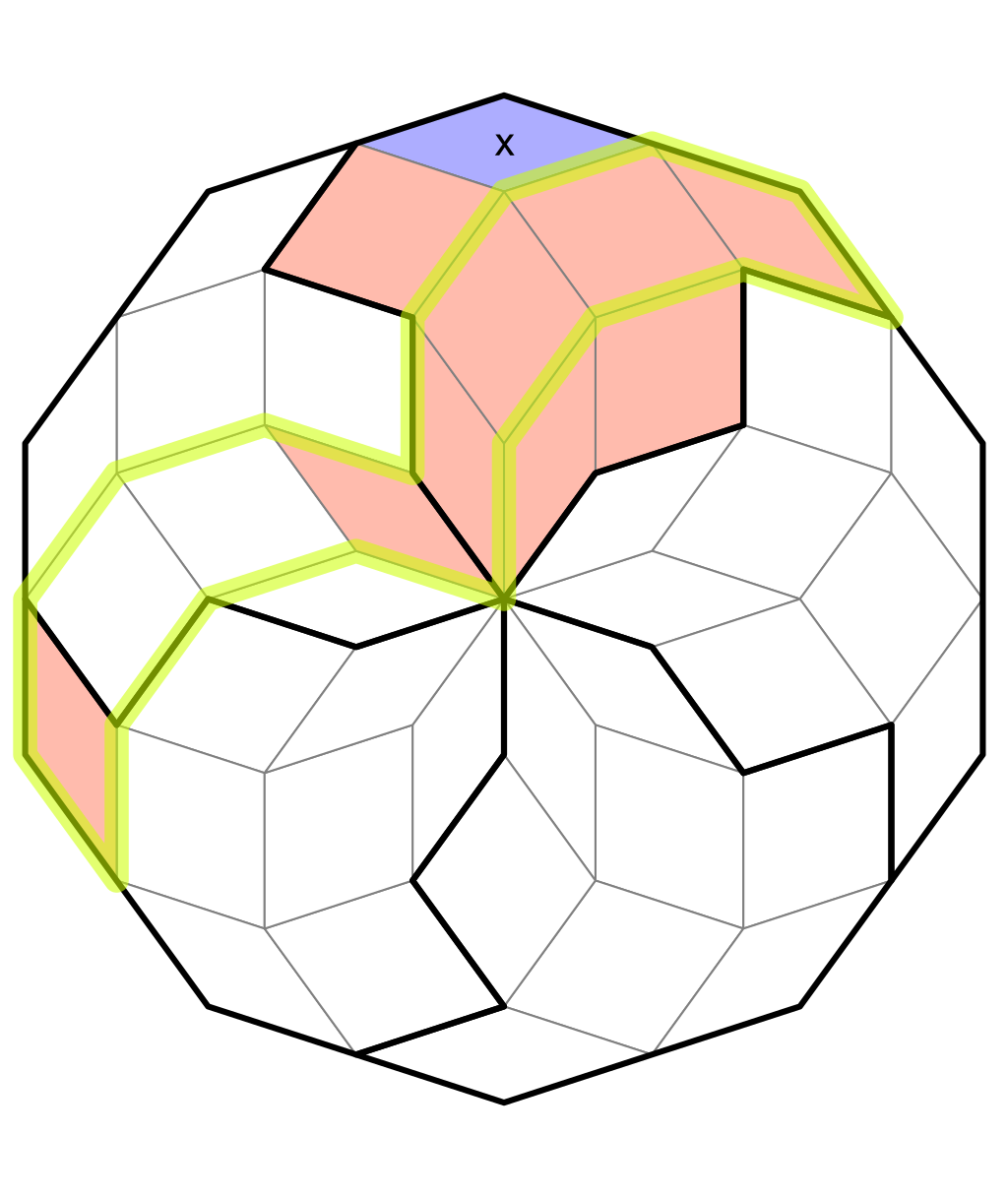
Note that six of the eight cells in that row have been marked red, indicating that they cannot have the value x. Each row must contain each value exactly once, so, in particular, this row must contain the value x in one cell. This means that one of the remaining two unmarked cells must have the value x:
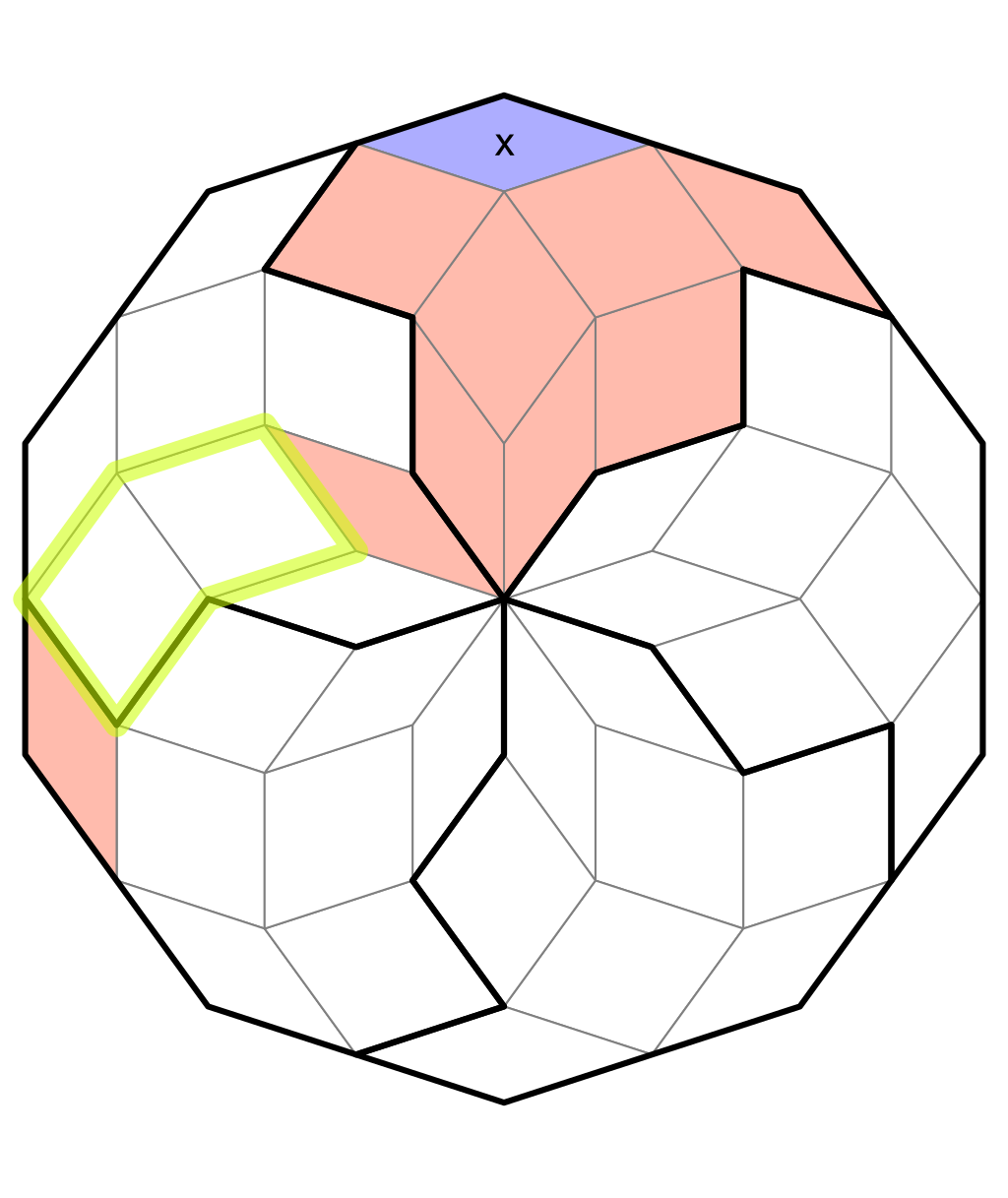
Note that the two cells highlighted in the image above both lie in the same block. If one of them must contain the value x, then none of the other cells in that block can contain x. Let us indicate this by marking all of the other cells in the block red:
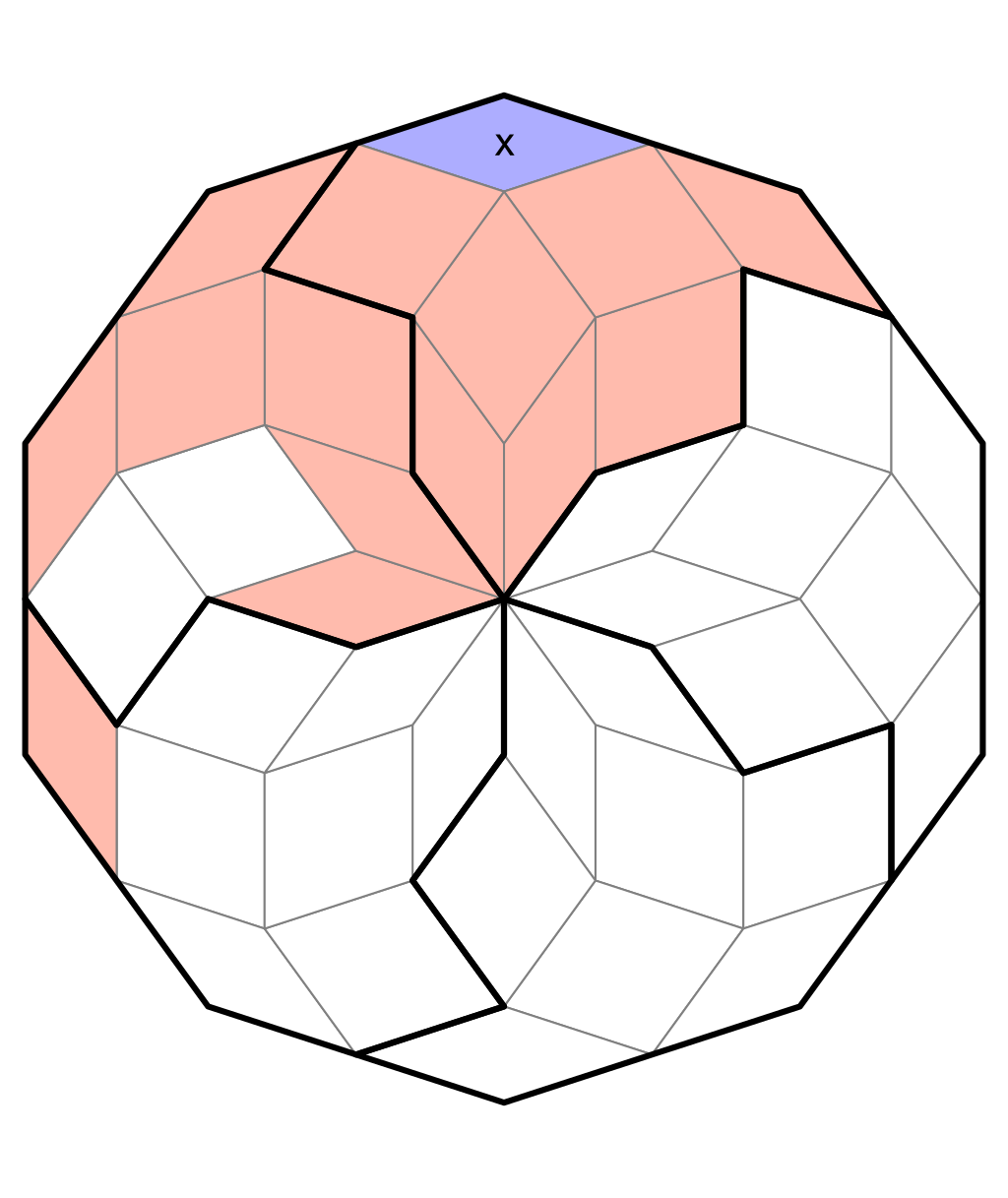
Now we can do the same trick again with another row:
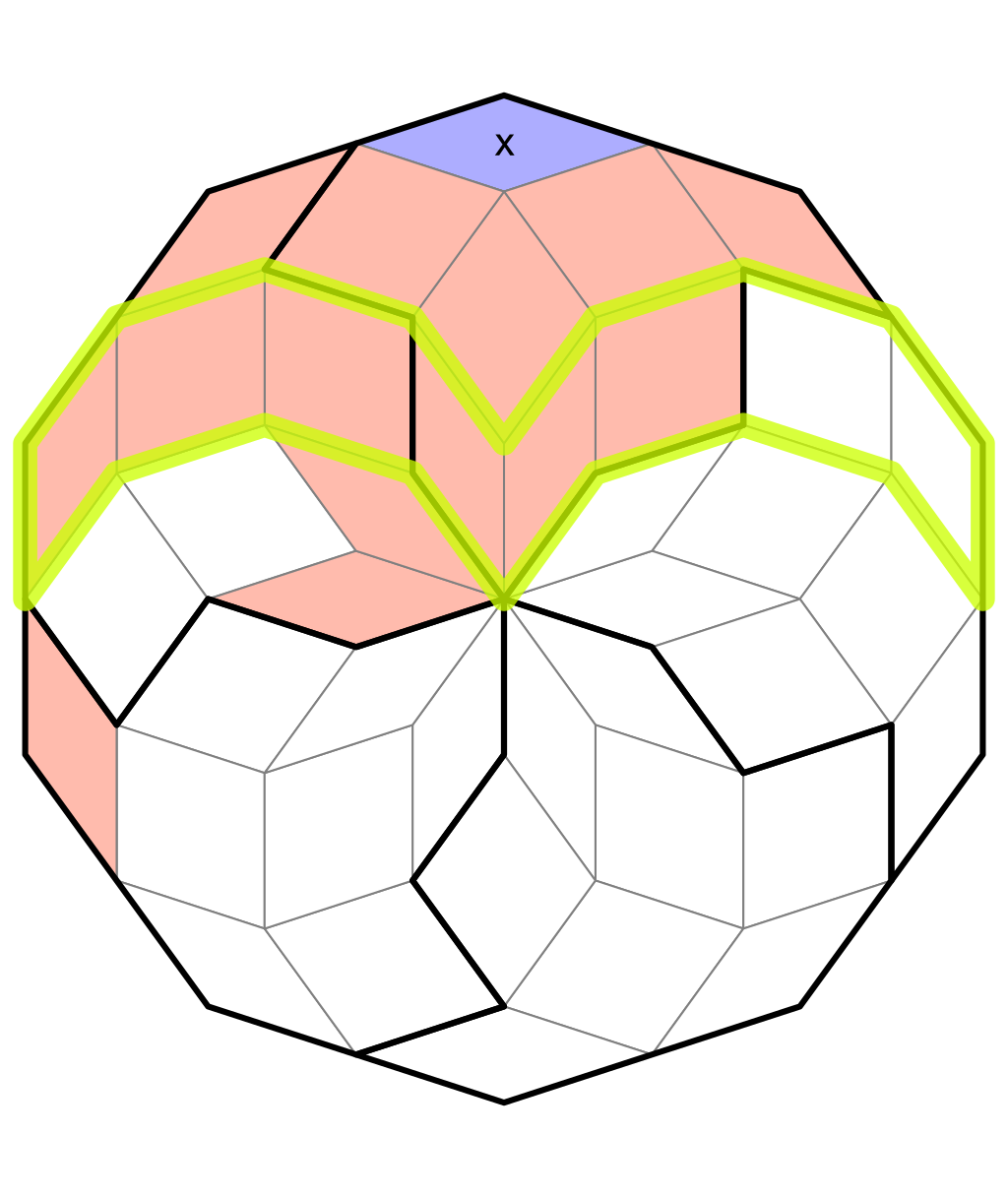
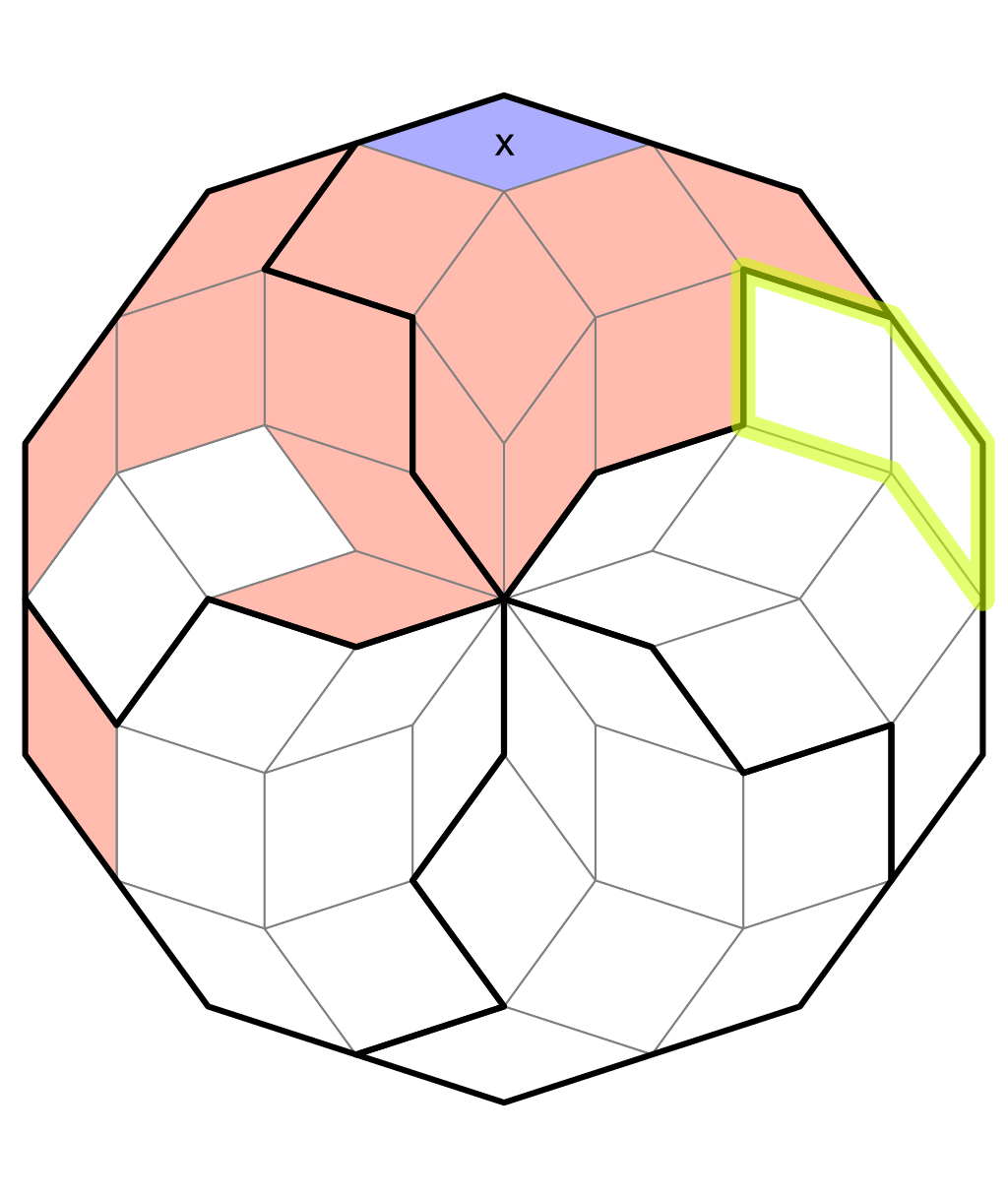
Consider the row that's outlined in the first image above. Again, this row only has two valid placements for the value x. These are highlighted in the second image above. And again, both of these cells lie in the same block, so no other cell in that block can contain the value x:
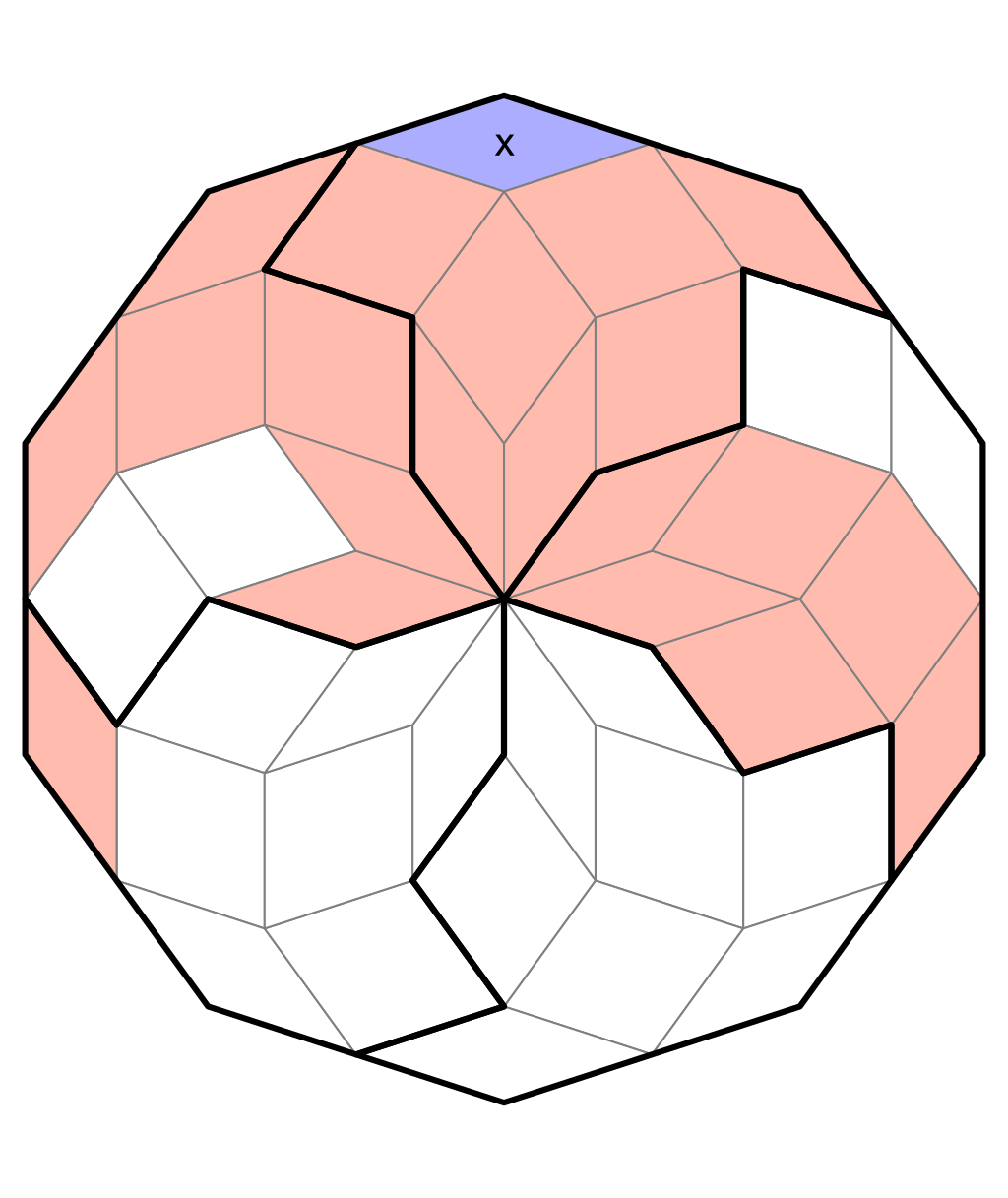
Now consider the row that's outlined in the image below:
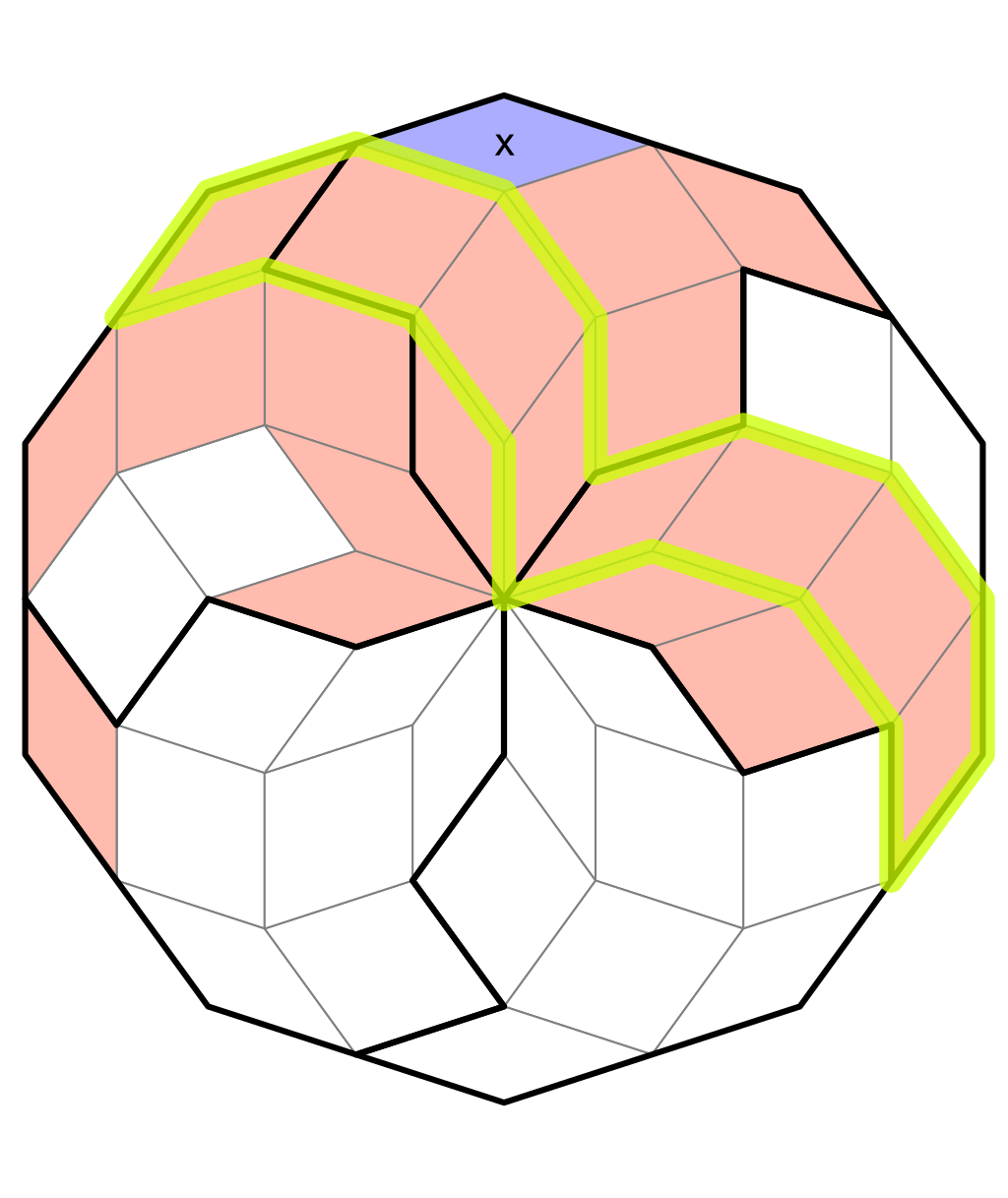
Every cell in this row has been marked red! This means that there is no valid placement for the value x in this row. But every row must contain each value exactly once in a valid Sudokutope board, therefore this conclusion is impossible. This means that our initial assumption must have been wrong, and the second cell must have contained the value x after all:
Rotational symmetry
Because the easy Sudokutope board has rotational symmetry, we can apply the Rim-Span Match Lock technique to conclude that other pairs of cells must also have the same values as one another:
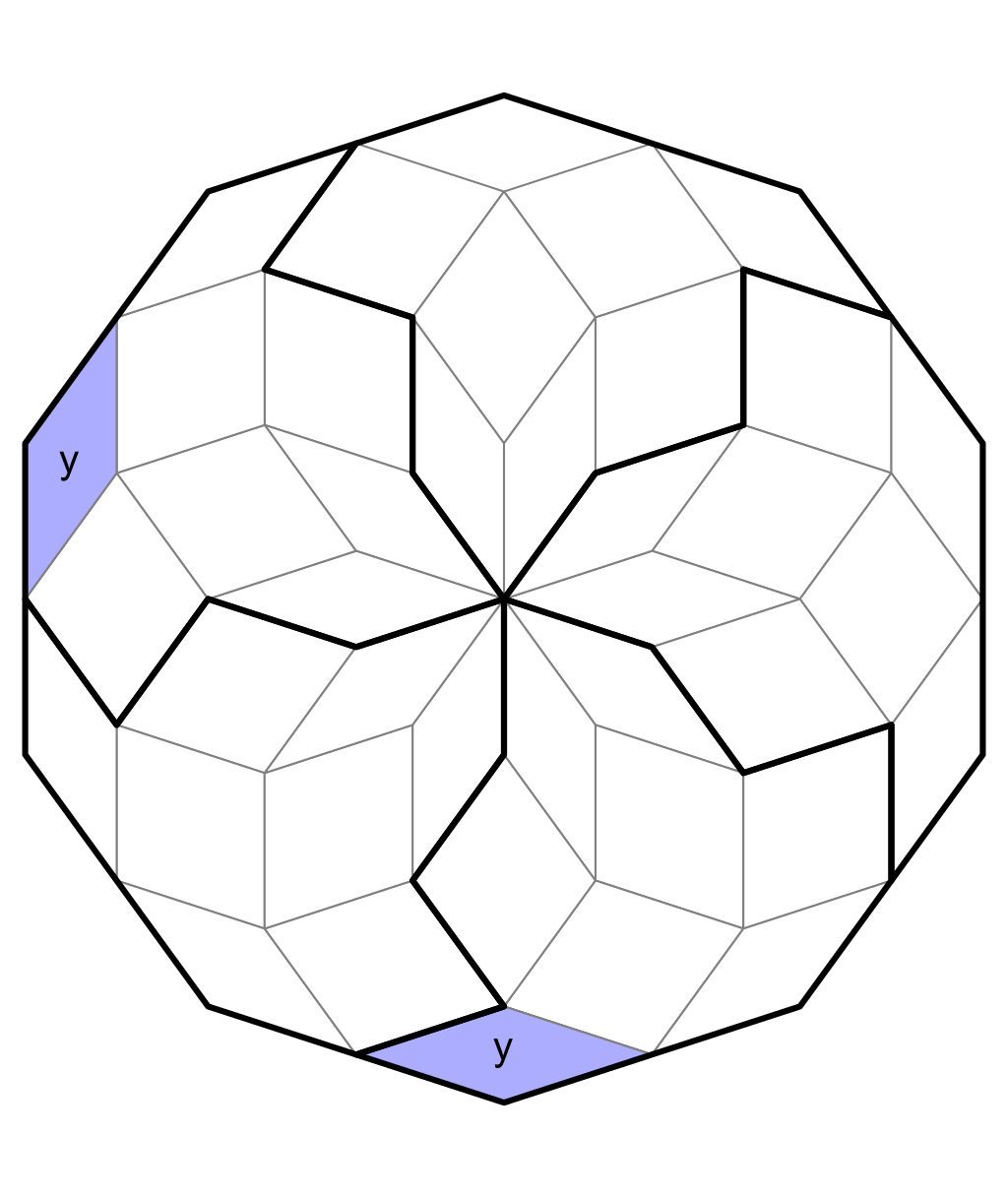
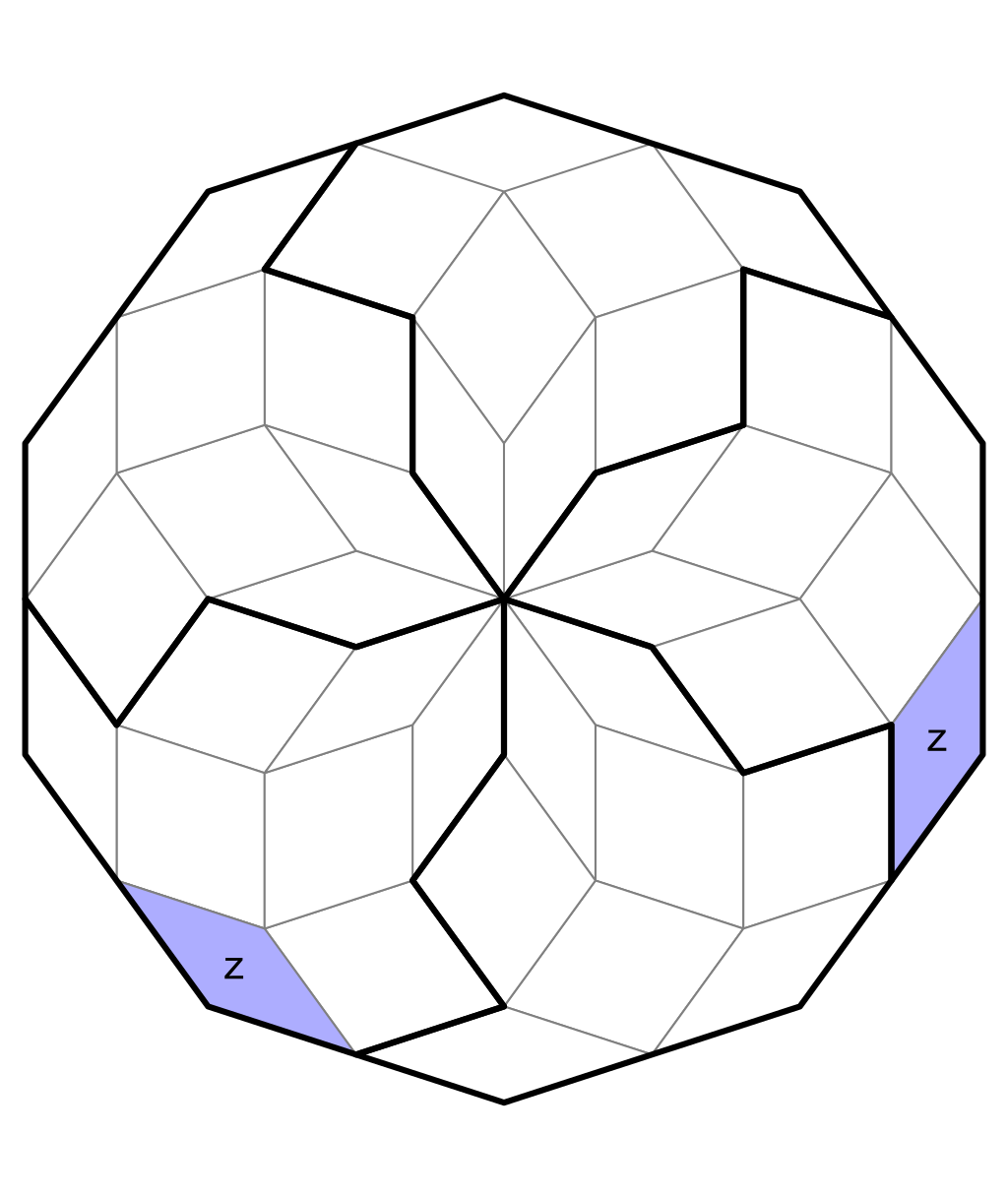
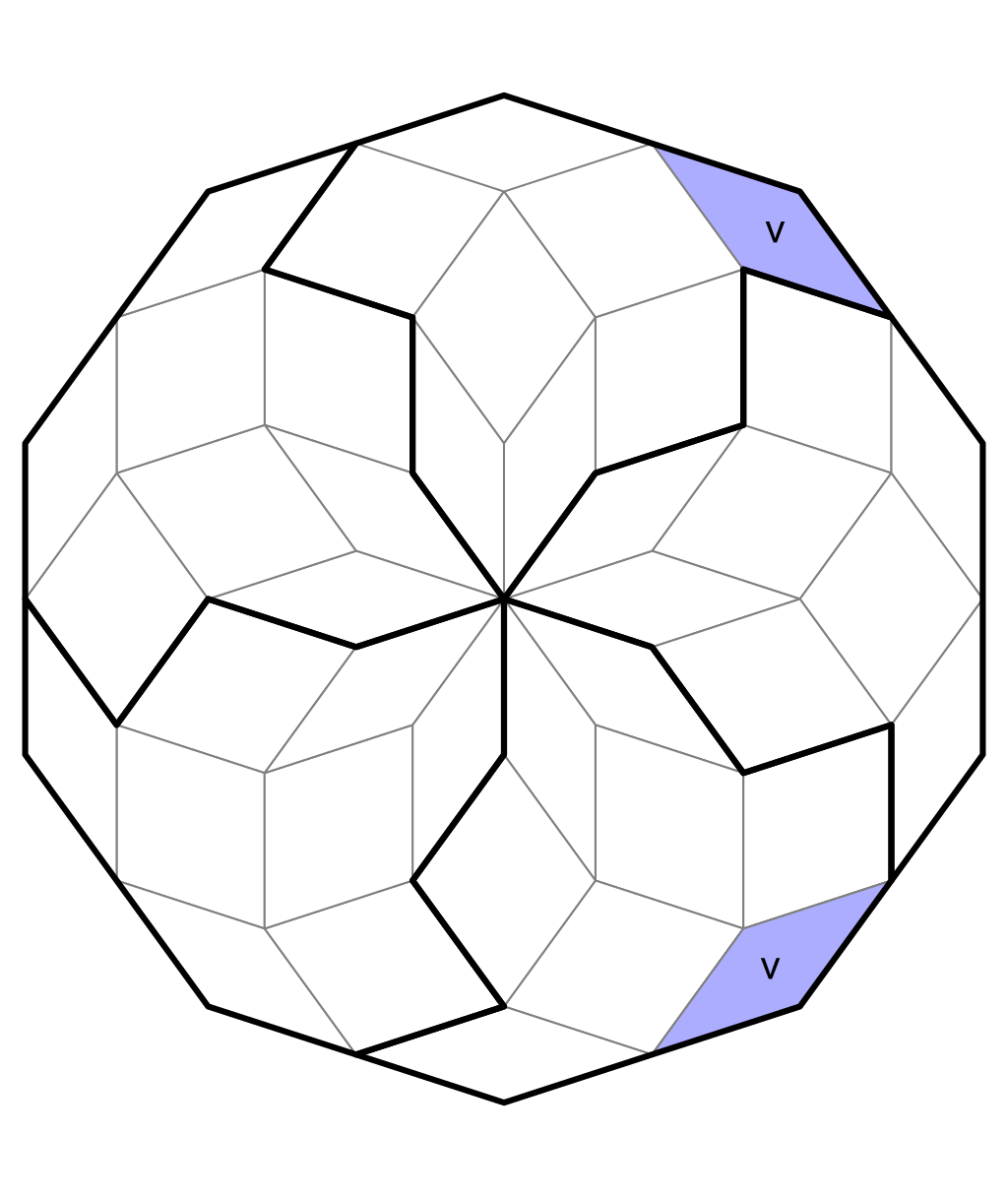
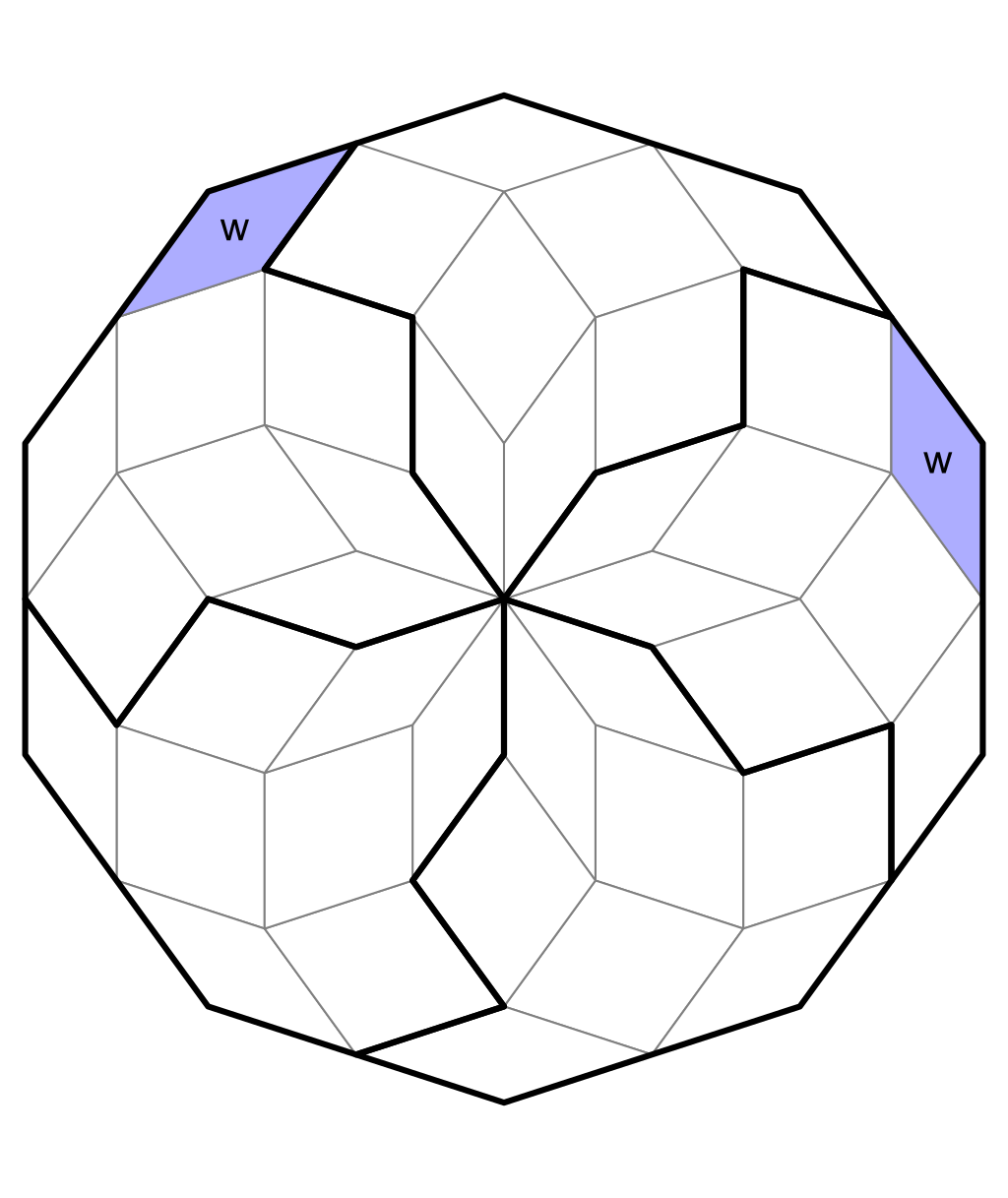
Note that we can only conclude that two cells in the same Rim-Span Match Lock pair image must have the same value; we are not saying that cells in different images must have the same value. Indeed, if you look carefully you'll see that some of these values cannot equal one another. For example, x cannot equal z.
Conclusion
We've shown that the Rim-Span Match Lock technique is always true in a valid Sudokutope board. This technique is a simple but powerful tool for solving Sudokutope puzzles. It is also a good example of how the unique geometry of the game board can be used to derive new techniques for solving the puzzle.
Continue to Sudokutope Techniques 2: Central Pinwheel Match Lock.